Chapter 50 is about letting the interview team see why you teach: through a student story, your tie to the community, and your love for your grade level or subject. It is for teacher candidates who know they care but are not sure how to show it in an answer. It follows Chapter 49 on what to wear, and the why do you want to be a teacher answer puts it into one interview question.
This is Chapter 50 of 51 from Road to Teaching (2025 edition). Read the whole book free, in order, at Read the Book.
By Dr. Eric Hougan
“Do not hire a man who does your work for money, but him who does it for love of it.”Henry David Thoreau
Hiring committees and administrators are seeking applicants that are deeply passionate about the children, community, and pedagogy. It is no secret that teaching entails work that is emotionally draining including long hours, countless demands, and ongoing professional development all while being unfairly compensated and undervalued. Therefore, the passion and devotion you bring to this profession will be the fuel to help you overcome these challenges and push forward.
During your interview look for any opportunities to share your why: the reasons you are seeking this position and why you are the right fit for it. In fact, you may be directly asked “Why are you applying for this position?” but in other cases, you will have to communicate your passion by answering less direct interview questions. Take time before going into your interview to reflect on your dedication and enthusiasm for education, especially as it relates to the students, community, and pedagogy.
Expressing Your Passion for Students
One way to express your passion for teaching is by recounting a story about a particular student and their growth and describing in detail what role you played in their success. Be sure to elaborate on how these student successes motivate you to be the best teacher for your students.
When sharing student stories, focus on specific, concrete examples that demonstrate your impact. Rather than saying “I helped a struggling student,” tell the story: “I had a third-grader who came to me reading below grade level and expressing frustration with books. I worked with him to find high-interest, low-level texts about his passion for dinosaurs. Over the course of the year, not only did his reading level improve by two grade levels, but he became the class expert on paleontology and started helping other students with their research projects.” This type of detailed narrative shows your ability to individualize instruction and your commitment to every student’s success.
Demonstrating Community Connection
Next, keep in mind the crucial role community plays in teaching and the school environment by expressing your understanding of its importance. For example, if you are from the local community, share some of your lived experiences and the reasons why you want to contribute and give back to the community. If you are from outside the area you would be teaching in, share what inspires you about the community such as the spirit of the residents, the rich diversity, or the sense of solidarity and resilience. It is also a good idea to name some specific community assets you could envision using with your students in the classroom.
Your community connection should go beyond surface-level observations. Demonstrate deep understanding by mentioning specific local organizations, cultural institutions, businesses, or community leaders that could enhance your teaching. For instance, you might say, “I’m excited about the possibility of connecting my science curriculum to the local nature preserve and partnering with the environmental education center to give students hands-on experience with local ecosystems.” This shows you’ve done your homework and can envision concrete ways to make learning relevant and engaging.
Showcasing Your Pedagogical Passion
Lastly, outline the reasons why you think you would be great at teaching that particular grade-level or subject area by drawing on your personal experience. For example, you may be passionate about special education because a close relative has autism and you understand the importance of providing a safe and caring learning environment for exceptional children. Alternatively, perhaps you have been a math or English tutor for some years and feel a deep connection to the content and can speak to your love and enthusiasm for teaching those subjects. Wherever your passions may lie, be sure you do not leave the interview without demonstrating them in some way to the interviewers.
Connect your pedagogical passion to current educational research and best practices. If you’re passionate about literacy, discuss how you stay current with reading research and how you might implement evidence-based strategies like guided reading or phonemic awareness instruction. If mathematics excites you, talk about your understanding of conceptual math instruction or how you would use manipulatives and real-world problem-solving to make math meaningful for students.
Articulating Your Unique Value
Beyond passion, clearly articulate what unique perspective or skills you bring to the position. This might be:
Diverse Experiences: Perhaps you’ve worked in different sectors before teaching, bringing real-world context to your instruction. A former business professional might bring entrepreneurship concepts to a classroom, while someone with healthcare experience could enhance science instruction with practical applications.
Specialized Skills: Maybe you’re fluent in multiple languages, have expertise in educational technology, or possess artistic talents that could enrich the learning environment across subjects.
Personal Qualities: Consider character traits that make you uniquely suited for teaching—perhaps your patience was developed through caring for aging parents, or your creativity was fostered through your hobby as a photographer.
Connecting Passion to Impact
Throughout your interview, consistently connect your passion back to student outcomes. Hiring committees want to know that your enthusiasm translates into effective teaching that helps students learn and grow. Use specific examples and data when possible to demonstrate how your passion has led to positive results for students.
By leaning into your commitment and enthusiasm for education, you will be able to address the interview questions with your head, heart, and soul. In the end, you only have one shot at this interview, so make it a homerun!
Let your genuine passion for teaching, students, and the specific community shine through in every interview response by sharing specific stories and concrete examples of your impact. Hiring committees can distinguish between authentic enthusiasm and rehearsed responses, and passion often becomes the deciding factor among qualified candidates.
Interviewing soon? See how this chapter turns into an answer: Why Should We Hire You? A Teacher Interview Answer
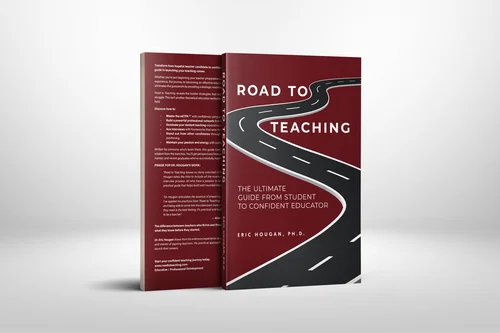
Want the whole road in your bag?
All 51 chapters plus 100+ interview questions, from your first education course to your first contract. Paperback $12.99, Kindle $7.99 on Amazon.