Make the most of your teacher preparation.
Your prep program is where the habits, relationships, and professional identity that define your career begin. Use this stage well, and student teaching, edTPA, and the job hunt all get easier.
Teacher preparation is more than coursework
Teacher preparation is the period — typically your education program and field placements — where you build the foundation to become a licensed, classroom-ready teacher. It is also the stage most candidates underuse.
It is tempting to treat these years as boxes to check: pass the classes, log the hours, move on. But the candidates who thrive later treat preparation as the time to build three things classes alone won't give them: a teaching identity they believe in, a network of mentors and advocates, and a range of real classroom experience. Get those right, and you walk into student teaching confident, and into interviews with a story to tell.
This page collects the free resources for this stage, and shows where the book picks up to carry you through the rest of the road.
Four things that set strong candidates apart
Most of your future success is built here, long before you interview.
Build your teaching identity
Get clear on what you believe about students and learning. A teaching philosophy you can articulate becomes the backbone of your edTPA, your interviews, and your classroom.
Network with intention
Your professors, cooperating teachers, and peers are your future references and job leads. Build genuine relationships now, because many first jobs come from a recommendation, not an application.
Diversify your experience
Seek placements across different grade levels, subjects, and student populations. The broader your real classroom experience, the more confident and more hireable you become.
Protect your energy
Self-care isn't a luxury, it's how you avoid burning out before you begin. Build sustainable habits while the stakes are still low so they hold when the workload climbs.
Get set up for success
Two free ways to build good habits from day one.
Monthly prep tips by email
One short, practical email a month on making the most of your program, networking, and getting ready for what's next.
Foundation & self-care articles
Practical reads on building sustainable habits, sharpening your instruction, and finding your footing as a future teacher.
Browse the articlesWhat Road to Teaching covers for this stage
Part I — Leverage Your Teacher Education Training — turns these years into a launchpad.
- Build a teaching philosophy and professional identity that's authentically yours
- Get the most out of your coursework and field placements
- Network with mentors, professors, and cooperating teachers who become references
- Diversify your experience across grade levels, subjects, and student populations
- Use AI tools effectively and ethically in your planning
- Build professionalism and habits that hold up under pressure
- Protect your wellbeing with realistic self-care
- Get a head start on edTPA before student teaching begins
Your teacher-prep resource library
Teacher preparation FAQ
What is teacher preparation?
Teacher preparation is the stage — usually a teacher education program plus supervised field placements — where you earn your foundation to become a licensed, classroom-ready teacher. It covers coursework, early classroom experience, and the start of edTPA and certification requirements.
How do I make the most of my teacher preparation program?
Go beyond passing classes. Build a teaching philosophy you can articulate, network intentionally with professors and cooperating teachers, diversify your field experiences across grade levels and student populations, and protect your energy with sustainable habits. These are the things that make student teaching and interviews easier later.
How important is networking during teacher preparation?
Very. Many first teaching jobs come through a recommendation rather than a cold application. The professors, mentors, and cooperating teachers you build genuine relationships with now become your references and your earliest job leads.
Should I diversify my field experiences?
Yes. Exposure to different grade levels, subjects, and student populations makes you a more confident teacher and a more hireable candidate. It also helps you discover what and who you most want to teach.
When should I start preparing for edTPA?
Earlier than most people do. Getting organized during your program, not once student teaching begins, is what helps candidates pass on the first attempt. You can start with the free edTPA chapter.
What does Road to Teaching cover for this stage?
Part I helps you build your teaching identity, network, diversify your experience, use AI well, and get ahead on edTPA, then carries you through student teaching and the job search. See the book.
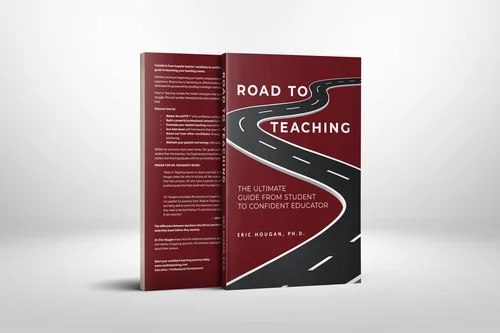
The foundation is Part I. The book covers the rest.
From your first term through signing your first contract — student teaching, edTPA, and the job search, all in one guide.
Further down the road?