Pass the edTPA on your first try
The edTPA stumps even well-prepared candidates, but it follows a predictable pattern. Get organized early, write to the rubrics, and the assessment becomes manageable instead of overwhelming. Start with the free chapter below.
What is the edTPA?
The edTPA™ is a performance-based, subject-specific assessment that teacher candidates complete during student teaching to demonstrate they are ready to lead a classroom. It was developed by the Stanford Center for Assessment, Learning, and Equity (SCALE) and is administered by Pearson, with versions for more than 25 teaching fields.
Instead of a multiple-choice exam, you submit a portfolio built around a short learning segment — typically 3–5 connected lessons. That portfolio includes your lesson plans, unedited video clips of you teaching, samples of student work, and written commentaries that explain your decisions. It is organized into three tasks: Planning, Instruction, and Assessment.
Evaluators score your portfolio against 15 rubrics, each on a 1–5 scale, for a total possible score of 15–75. A score of 3 on a rubric represents a candidate who is “ready to teach.” Each state sets its own passing cut score, so the number you need depends on where you are seeking licensure. The throughline across every rubric is academic language — showing how you help students use the reading, writing, and discipline-specific vocabulary your lesson demands.
Two free ways to get edTPA-ready
Grab them now — they show exactly how the book approaches the edTPA.
Chapter 5: “Organize for the edTPA”
The organization system that turns the edTPA from overwhelming into manageable. Enter your email, and we’ll send the chapter straight to your inbox.
One email with your chapter, plus a few genuinely useful edTPA tips. Unsubscribe anytime.
edTPA articles & reflections
Practical reads from candidates who have been through it — what got them through the edTPA, how to start writing, and why knowing your students drives nearly every rubric.
Browse the articlesMaster the three edTPA tasks
Every edTPA handbook is built on the same three tasks. Here is what each one asks for, and the mistake that costs candidates the most points.
Planning
You design a 3–5 lesson learning segment and write commentary showing you understand your students, your content standards, and the academic language the lessons require.
Instruction
You submit unedited video clips of your teaching and reflect on your pedagogical choices, student engagement, and the learning environment you create.
Assessment
You analyze student work samples, document the feedback you gave, and reflect on what the evidence says about your instruction and what you would do next.
How to pass the edTPA on your first try
Most candidates who pass on the first attempt do the same handful of things. None of them are complicated.
Start before student teaching begins
Set up your files, calendar, and a backwards timeline early. Candidates who organize during their program, not once teaching starts, give themselves room to do the work well.
Read the rubrics first
Download your subject-specific handbook and read the 15 rubrics before you plan anything. You are writing to what evaluators actually score, so let the rubric language shape your lessons and commentary.
Make academic language explicit
Academic language runs through every task. Plan for the language function, vocabulary, syntax, and discourse your lesson demands, and build in concrete support for them.
Capture clean video evidence
Test your audio and framing early, get your media-release forms signed, and film authentic teaching. Choose clips that clearly show you responding to students, not just delivering content.
Analyze student work as a story
Pick a focused sample set, connect each piece to your learning objective, and name the patterns. Evaluators reward evidence that you noticed what happened, and that you know what to do about it.
Reflect specifically
Vague reflection sinks scores. Say what you would change, why, and what evidence points you there. Specific beats comprehensive on every rubric.
What Road to Teaching covers for the edTPA
Part II takes you through all three tasks with frameworks, examples, and sample commentary.
- Get organized for the edTPA before student teaching starts
- Plan a strong learning segment built around the rubrics
- Develop academic language across planning, instruction, and assessment
- Capture video evidence that shows authentic teaching
- Analyze student work to demonstrate real impact on learning
- Write commentary and reflection that score well
- Avoid the common mistakes that send candidates to a retake
- Use AI tools ethically to plan and refine your work
Free edTPA reads
edTPA FAQ
Is the edTPA hard to pass?
The edTPA is demanding but very passable, and most candidates pass on their first attempt. The difficulty is less about teaching ability and more about organization and writing to the rubrics. Candidates who start early, plan around the 15 rubrics, and reflect specifically tend to clear it comfortably.
How do I pass the edTPA on the first try?
Get organized before student teaching starts, read your subject-specific handbook and rubrics first, make academic language explicit across all three tasks, capture clean video of authentic teaching, and analyze student work as a clear story. The free Chapter 5 download covers the organization system that the rest depends on.
What are the three edTPA tasks?
Planning, Instruction, and Assessment. In Planning you design a 3–5 lesson learning segment; in Instruction you submit unedited video of your teaching; in Assessment you analyze student work and reflect on its impact. Academic language runs through all three.
How is the edTPA scored?
Evaluators score your portfolio on 15 rubrics, each from 1 to 5, for a total range of 15–75. A 3 indicates a candidate who is ready to teach. Each state sets its own passing cut score, so confirm the number your state requires.
When should I start preparing for the edTPA?
Earlier than most candidates do — ideally during your teacher preparation program, before student teaching begins. Early organization is the single biggest predictor of passing on the first attempt.
Does my state still require the edTPA, and what is edTPA Essentials?
It depends on your state and program. Some states have dropped the requirement while others still require a passing score, so check the official state policy overview. A streamlined two-task version, edTPA Essentials, is scheduled to launch in August 2026; the core skills on this page apply to both versions.
Sources: Stanford SCALE, edTPA structure and assessment areas, and the edTPA state policy overview.
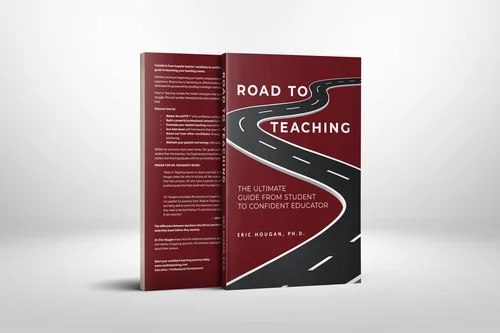
Chapter 5 is the start. The book is the rest.
All three tasks, with frameworks, examples, and sample commentary — plus the student teaching and job-search stages on either side of it.