Your teaching philosophy is what you believe about students, learning, and your role in the classroom, written down so you can act on it. This chapter opens Section II of the book, Excel at Student Teaching, and walks teacher candidates through the questions to reflect on, how to start writing, and two sample statements from teacher candidates. If you are getting ready to answer the question in an interview, the post What Is Your Teaching Philosophy? shows how to turn this work into a spoken answer.
This is Chapter 16 of 51 from Road to Teaching (2025 edition). Read the whole book free, in order, at Read the Book.
By Dr. Eric Hougan
“The philosophy of the schoolroom in one generation will be the philosophy of government in the next.”Abraham Lincoln
In this section of the book, you will learn strategies that will prepare you for student teaching. Student teaching is typically the culminating practicum experience where you apply what you have learned from your teacher training to a real classroom. A wise first step to prepare for student teaching is by developing a sound personal philosophy of education. The above quote from Abraham Lincoln illustrates the importance of your education philosophy, as it affects future generations and shapes society.
What Is an Education Philosophy Statement?
An education philosophy statement is the bedrock of any master teacher; it encapsulates the principles and beliefs you bring to your teaching and creates the foundation and framework from which your classroom decisions are made. Once established, your philosophy will fundamentally remain the same but will evolve over time to reflect your teaching and life experiences and ongoing professional development. Since it is your foundation, it is important to have clarity of your education philosophy before you begin your journey in teaching.
Your educational philosophy isn’t merely an academic exercise—it’s the living, breathing core of your professional identity. It serves as your compass when faced with difficult decisions, guides your interactions with students and colleagues, and helps you articulate your purpose as an educator. In an era of shifting educational policies, a well-developed philosophy helps you maintain focus on what truly matters in education.
Writing an Education Philosophy Statement
Crafting a philosophy statement takes considerable time and reflection. To begin, reflect on the following questions and write your responses, perhaps using these questions as writing prompts for your journal:
- What motivated you to go into teaching?
- What values and beliefs would an ideal teacher have?
- What are your beliefs about students, learning, behavior, respect, schools, general education, etc.?
- What changes would you like to see in our education system?
- What values do you want to model for the students inside and outside the classroom?
- Of your stated beliefs, which ones are non-negotiable?
- How do your own experiences as a student influence your views on teaching?
- What do you believe about the role of technology in education?
- How do you envision creating an inclusive classroom environment?
- What is the purpose of education in today’s society?
When you begin writing your education philosophy statement remember that it is about you and your beliefs. Avoid writing educational buzzwords and phrases to just make it sound better. The best way to start is with “I believe...” Keep it short—no longer than one page of single-spaced type.
Your philosophy statement should reflect authentic voice and genuine convictions. Consider reading philosophy statements from educators you admire to understand different approaches, but resist the temptation to simply adopt someone else’s philosophy. The most compelling statements grow from personal reflection and clearly connect to your own values and experiences.
For illustrative purposes, below are two sample education philosophy statements from teacher candidates at the Ohio State University College of Education. As you read through these philosophy statements notice how the formatting and approach express each writer’s individuality. Although very different, both are effective and well-written. To be clear, it takes effort and time to write a concise, effective statement of philosophy, so do not give up on your first try. Continue to revisit your philosophy statement and, periodically, reflect on in what ways this living document reflects your core beliefs and pedagogical practices.
Example 1 of an Education Philosophy Statement
I believe the children are our future... I believe each and every child has the potential to bring something unique and special to the world. I will help children to develop their potential by believing in them as capable individuals. I will assist children in discovering who they are, so they can express their own opinions and nurture their own ideas. I have a vision of a world where people learn to respect, accept, and embrace the differences between us, as the core of what makes life so fascinating.
Teach them well and let them lead the way... Every classroom presents a unique community of learners that varies not only in abilities, but also in learning styles. My role as a teacher is to give children the tools with which to cultivate their own gardens of knowledge. To accomplish this goal, I will teach to the needs of each child so that all learners can feel capable and successful. I will present a curriculum that involves the interests of the children and makes learning relevant to life. I will incorporate themes, integrated units, projects, group work, individual work, and hands-on learning in order to make children active learners. Finally, I will tie learning into the world community to help children become caring and active members of society.
Show them all the beauty they possess inside. Give them a sense of pride... My classroom will be a caring, safe, and equitable environment where each child can blossom and grow. I will allow children to become responsible members of our classroom community by using strategies such as class meetings, positive discipline, and democratic principles. In showing children how to become responsible for themselves as well as their own learning, I am giving them the tools to become successful in life, to believe in themselves, and to love themselves.
Let the children’s laughter remind us how we used to be... Teaching is a lifelong learning process of learning about new philosophies and new strategies, learning from the parents and community, learning from colleagues, and especially learning from the children. Children have taught me to open my mind and my heart to the joys, the innocence, and the diversity of ideas in the world. Because of this, I will never forget how to smile with the new, cherish the old, and laugh with the children.
Example 2 of an Education Philosophy Statement
I believe that each child is a unique individual who needs a secure, caring, and stimulating atmosphere in which to grow and mature emotionally, intellectually, physically, and socially. It is my desire as an educator to help students meet their fullest potential in these areas by providing an environment that is safe, supports risk-taking, and invites a sharing of ideas. There are three elements that I believe are conducive to establishing such an environment, (1) the teacher acting as a guide, (2) allowing the child’s natural curiosity to direct his/her learning, and (3) promoting respect for all things and all people.
When the teacher’s role is to guide, providing access to information rather than acting as the primary source of information, the students’ search for knowledge is met as they learn to find answers to their questions. For students to construct knowledge, they need the opportunity to discover for themselves and practice skills in authentic situations. Providing students access to hands-on activities and allowing adequate time and space to use materials that reinforce the lesson being studied creates an opportunity for individual discovery and construction of knowledge to occur.
Equally important to self-discovery is having the opportunity to study things that are meaningful and relevant to one’s life and interests. Developing a curriculum around student interests fosters intrinsic motivation and stimulates the passion to learn. One way to take learning in a direction relevant to student interest is to invite student dialogue about the lessons and units of study. Given the opportunity for input, students generate ideas and set goals that make for much richer activities than I could have created or imagined myself. When students have ownership in the curriculum, they are motivated to work hard and master the skills necessary to reach their goals.
Helping students to develop a deep love and respect for themselves, others, and their environment occurs through an open sharing of ideas and a judicious approach to discipline. When the voice of each student is heard, and environment evolves where students feel free to express themselves. Class meetings are one way to encourage such dialogue. I believe children have greater respect for their teachers, their peers, and the lessons presented when they feel safe and sure of what is expected of them. In setting fair and consistent rules initially and stating the importance of every activity, students are shown respect for their presence and time. In turn, they learn to respect themselves, others, and their environment.
For myself, teaching provides an opportunity for continual learning and growth. One of my hopes as an educator is to instill a love of learning in my students, as I share my own passion for learning with them. I feel there is a need for compassionate, strong, and dedicated individuals who are excited about working with children. In our competitive society, it is important for students to not only receive a solid education but to work with someone who is aware of and sensitive to their individual needs. I am such a person and will always strive to be the best educator that I can be.
As you develop your own philosophy statement, consider how it will guide your decision-making in the classroom. A well-crafted philosophy becomes a practical tool, not just a theoretical exercise. When facing difficult choices about curriculum, assessment, or classroom management, your philosophy statement can help you evaluate options and choose approaches that align with your core values.
Remember that your educational philosophy will continue to evolve throughout your career as you gain new experiences and insights. Plan to revisit and refine your statement periodically, perhaps at the beginning of each school year or when transitioning to a new teaching position. This reflective practice will help you maintain alignment between your stated beliefs and your classroom practice.
Develop an authentic, concise educational philosophy that reflects your genuine beliefs rather than educational buzzwords. This foundation will guide your decision-making, help you articulate your approach in interviews, and provide stability as you navigate the inevitable challenges and changes in education.
Interviewing soon? See how this chapter turns into an answer: What Is Your Teaching Philosophy? and Why Do You Want to Be a Teacher?
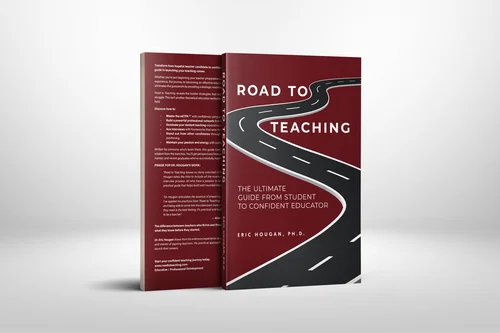
Want the whole road in your bag?
All 51 chapters plus 100+ interview questions, from your first education course to your first contract. Paperback $12.99, Kindle $7.99 on Amazon.