Every new teacher runs into the same thing early on: the job keeps changing under you. This first chapter lays out the simple cycle I come back to again and again (build your knowledge, apply it, then reflect on it), and it is written for teacher candidates who are just getting started in their program.
This is Chapter 1 of 51 from Road to Teaching (2025 edition). Read the whole book free, in order, at Read the Book.
By Dr. Eric Hougan
“Change is the law of life and those who look only to the past or present are certain to miss the future.”John F. Kennedy
In education nothing is static; change is the one constant factor. To survive you need to embrace this reality, as your pedagogy will be challenged regularly by new students, research, and technological innovations. This begs the question: How does a novice teacher tackle the challenge of constant change? In short, teachers need to continually adapt and reinvent themselves as professionals. This transformation is a process of acquiring knowledge about new changes and how to best address them; applying this knowledge; and, finally, reflecting upon how well you, as a teacher, met these changes.
Building a Foundation of Knowledge
In the first stage of your teacher training, you will be a learner, building a foundation of knowledge with your studies, research, practice, experiences, and reflection. Here are a few ways you may grow as a learner in your educational training:
- Observing classrooms, both in-person and through video analysis
- Diving into the history and laws of education
- Creating lesson plans that address students’ diverse learning needs
- Learning about culturally responsive teaching and anti-bias education
- Experimenting with instruction and assessment to meet students’ varied learning styles
- Integrating technology into the learning environment
- Developing a deeper understanding of the education lexicon
- Exploring social-emotional learning and trauma-informed practices
- And much more.
Through your studies and experiences, you will begin to establish the necessary foundation to build your teaching philosophy and pedagogy. By continually seeking knowledge, possessing the courage to apply best practices, and developing a habit of meaningful self-reflection, not only will you keep pace with change, but you will also become a catalyst for positive change.
Applying Your Knowledge
The next step in the teaching process is the application of knowledge: taking all that you have learned and applying it in the classroom. For a teacher candidate, student teaching is the culminating practicum experience that allows you to practice what you have learned throughout your teacher training within a real classroom. Even before student teaching, a teacher candidate may have opportunities to apply their knowledge and skills. Modern teacher preparation programs increasingly integrate more fieldwork within schools to provide authentic practice experiences. Yet, even if opportunities to be in the schools are limited, you may experience opportunities for practice by lesson planning, teaching your peers, developing the habit of listening to constructive criticism, and learning from your mistakes with your teacher training. The application of knowledge is a critical piece in the teaching process. You must be open to new ideas, paradigms, and pedagogical best practices, and be willing to challenge yourself to apply those in your classroom. In the application stage, you begin to define yourself as a teacher that takes risks and puts forth his or her best effort.
Reflection on Continual Improvement
In the spirit of continual improvement, you will be doing a great deal of reflection as a teacher and teacher candidate. A reflective teacher focuses on areas of growth and celebration, continuously looks to the future, and is driven to excel. Reflection allows you to evaluate the effectiveness of your pedagogy during the application stage. In other words, you will examine what worked and what didn’t work, such as trying a new instructional strategy or strengthening student relationships. Furthermore, through this reflective lens, you will consider the changes needed for the future as this reflective process is an ongoing commitment to renewal and growth. Reflecting on your pedagogy should not be burdensome or time-consuming. Sometimes just jotting down quick notes on what you wish to improve is sufficient. The main point is to find a system that allows you to adjust and improve your lessons. Today’s digital tools offer new possibilities for reflection—whether through audio recordings of your thoughts after a lesson, digital journaling apps, or collaborative reflection with mentors via video conferencing. Practical strategies on becoming a more reflective teacher are provided later in the book. By learning from your experiences, you will continue to build your foundation of knowledge and the teaching process will continue. The teaching process is cyclical and ongoing—you build knowledge, apply it in practice, reflect on the outcomes, and then return to building more knowledge based on what you’ve learned. This continuous improvement cycle will become second nature as you progress in your teaching career, helping you adapt to the ever-changing landscape of education.
Master the three-stage teaching cycle—build knowledge, apply it authentically, and reflect meaningfully—while embracing change as your pathway to growth. Take pedagogical risks and learn from failures, as this continuous improvement mindset will define your effectiveness throughout your entire teaching career.
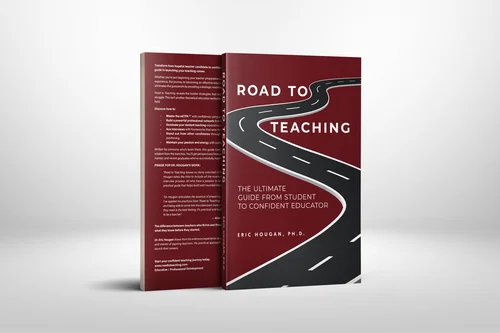
Want the whole road in your bag?
All 51 chapters plus 100+ interview questions, from your first education course to your first contract. Paperback $12.99, Kindle $7.99 on Amazon.