Chapter 39 is about starting your teaching job search on purpose: deciding what and where you want to teach, ranking what matters to you, and checking district job boards on a schedule. It is for teacher candidates who are about to apply and want a plan before the postings open. It follows Chapter 38 on talking about your work experience, and the job search guide has more help for this stage.
This is Chapter 39 of 51 from Road to Teaching (2025 edition). Read the whole book free, in order, at Read the Book.
By Dr. Eric Hougan
“Frustration, although quite painful at times, is a very positive and essential part of success.”Bo Bennett
As you begin your job search, it is crucial to first identify your preferences of where and what you would like to teach. Blindly entering the job market without a clear idea of what you are looking for will only prove to be a waste of time and create frustration during this already stressful endeavor. To help uncover this information, begin by asking yourself the following questions:
- What grade levels and subjects would you prefer to teach?
- What are the geographical boundaries of your job search? In other words, are far are you willing to commute each day?
- Within these geographic boundaries, what districts and school(s) do you want to apply to?
Carefully reflect on your answers to create a vision of your ideal job situation, being mindful not to narrow your focus too much. For example, when deciding what grade levels you would like to teach, list your top 3 choices but also note other grade levels you would consider if certain conditions were met (i.e. closer to home, attractive benefits, higher salary, etc.).
Teacher candidates are often so excited to enter the workforce that they become set on finding the perfect teaching job right out of their teacher preparation program. However, by setting this expectation, you will risk overlooking positions that may be great opportunities just because they do not fit the preferences of your ideal teaching job. Searching for the right fit is a balance; the key is to know what you are looking for and where your priorities lie while being flexible and open to different possibilities.
Clarify Your Priorities
Before diving into applications, take time to rank your priorities. What matters most to you in your first teaching position? Consider factors such as:
Professional Growth Opportunities:
- Mentorship programs for new teachers
- Professional development offerings
- Opportunities for leadership or specialization
- Supportive administrative teams
Compensation and Benefits:
- Starting salary and potential for increases
- Health insurance and retirement benefits
- Tuition reimbursement programs
- Paid time off policies
School Culture and Environment:
- Class sizes and student-teacher ratios
- Diversity of student population
- School resources and technology
- Community support for education
Work-Life Balance:
- Commute time and transportation options
- After-school and weekend commitments
- Flexibility for personal obligations
- Summer employment opportunities
Understanding your priorities helps you evaluate opportunities more objectively and communicate your interests clearly during interviews.
Research Your Target Areas
Armed with this new knowledge of what you want to teach, the geographic boundaries for your search, and the specific district(s) and school(s) you want to focus on, start your job search by visiting these districts’ websites. Most school districts update their job openings weekly so it is helpful to bookmark each pertinent site in your browser to save you time. Plan on visiting each site at least once a week, at a minimum, to keep up with all the current listings.
Typically, school districts will only keep their job listings open for a set amount of time, which most often ranges from one week to open until filled. Therefore, if you visit the sites on an inconsistent or erratic basis, you may miss out on a myriad of job opportunities.
Digital tools can streamline your research process:
- Job alert systems: Set up notifications for positions in your preferred districts
- Spreadsheet tracking: Create a system to monitor application deadlines and requirements
- Social media monitoring: Follow district and school social media accounts for insights into culture and priorities
- Professional networks: Connect with current teachers in your target areas through LinkedIn or local education groups
Expand your job search even further by researching other online job posting websites, attending career fairs, and speaking to career services within your teacher preparation program or university.
Be Strategic About Timing
Understanding when districts typically hire can help you time your search effectively. Many districts begin posting positions for the following school year as early as March, with peak hiring occurring in May and June. However, opportunities continue to arise throughout the summer and even into the school year as districts fill last-minute openings.
Consider creating a job search calendar that includes:
- Application deadlines for your target districts
- Career fair dates and registration deadlines
- Interview preparation milestones
- Follow-up reminder dates
Maintain Realistic Expectations
Ultimately, as a first-year teacher and depending on the current job market conditions, you may have to settle on a job that is not ideal. For example, you may accept a teaching position that matches what grade-level or subject-area you wanted but have a longer commute than you desired. On the other hand, you find yourself in the situation of being offered a job teaching in a grade-level or subject area you didn’t want but in a school that is closer to home. You will have to weigh these advantages and disadvantages, but remember you do not always have to commit to the first job offer, especially if it is early in the hiring season.
Keep in mind that your first teaching position is just that—your first. Most teachers change positions multiple times throughout their careers, often moving to different grade levels, subjects, or districts as they gain experience and clarify their preferences. View your first position as an opportunity to gain valuable experience while continuing to explore what type of teaching environment suits you best.
Prepare for Multiple Scenarios
As you conduct your search, prepare for different possible outcomes:
- Multiple offers: Have criteria ready for comparing opportunities
- No immediate offers: Develop backup plans such as substitute teaching or additional networking
- Unexpected opportunities: Be open to positions that don’t perfectly match your initial criteria but offer other valuable benefits
Remember that finding the right teaching position often involves a combination of preparation, persistence, and timing. Stay organized, remain flexible, and trust that your dedication to finding a good fit will ultimately lead you to a position where you can thrive as an educator.
Define your preferences clearly while maintaining flexibility, research target districts thoroughly, and understand that your first teaching position is a steppingstone rather than your final destination. Stay organized and realistic while remaining open to opportunities that don’t perfectly match your initial criteria.
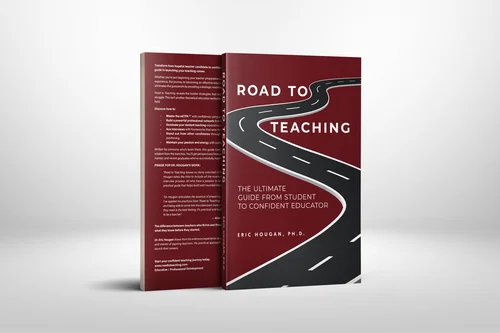
Want the whole road in your bag?
All 51 chapters plus 100+ interview questions, from your first education course to your first contract. Paperback $12.99, Kindle $7.99 on Amazon.