edTPA Essentials is the shorter, two-task version of the edTPA that Pearson launched in September 2026. It asks for two tasks instead of three, so there is less to document and less commentary to write, but the rubrics still reward the same habits: specific evidence, specific students, and a clear reason for every choice.
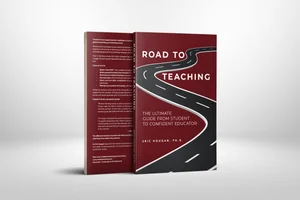
Working on your edTPA now? The whole book, with its edTPA chapters, is on Kindle tonight.
5.0 stars on Amazon, 35 ratings.
Dr. Eric Hougan, Professor of Teacher Education. Updated November 2026.
Free to start: the edTPA organization chapter as a PDF, and the full edTPA Success Guide.
What is edTPA Essentials?
Pearson introduced edTPA Essentials in September 2026 as a streamlined version of the edTPA portfolio. The full edTPA asks you to build a portfolio around a short learning segment, typically 3 to 5 connected lessons, and to organize it into three tasks: Planning, Instruction and Assessment. You submit your lesson plans, unedited video clips of you teaching, samples of student work, and written commentaries that explain your decisions.
Essentials keeps the portfolio idea and drops one task. Two tasks means fewer pages of commentary and fewer artifacts to gather, which is welcome news if you are student teaching full time. What it does not change is what the scorers are looking for. The rubrics still reward specific evidence from your own classroom, named or described students rather than “the class,” and a clear reason behind every choice you made. A candidate who writes vague commentary will struggle on either version.
If your program has not told you which version you are on, ask now. The two versions share the same habits, but the handbook, the task structure and the deadlines are different, and you want to plan your learning segment for the right one.
edTPA Essentials vs the full edTPA
Here is the short comparison, using what the two versions have in common and where they part ways.
| Full edTPA | edTPA Essentials | |
|---|---|---|
| Tasks | Three: Planning, Instruction, Assessment | Two, so less to document and less commentary to write |
| Portfolio | Lesson plans, unedited video clips, student work samples and written commentaries, built around 3 to 5 connected lessons | The same kind of evidence, with fewer pieces to gather; your Essentials handbook lists exactly what each task asks for |
| Rubrics | 15 rubrics, each scored 1 to 5, for a total of 15 to 75; a 3 means ready to teach | The same style of rubric, rewarding specific evidence, specific students and a clear reason for every choice; the count follows the two tasks in your handbook |
| Passing | Your state sets the passing total | Ask your program for the score your state requires on Essentials |
| Who uses it | Most states, as of late 2026 | Arkansas, California, Maryland and West Virginia so far |
The practical difference is workload, not standard. Plan for the same quality of evidence and the same clarity in your writing, and let the shorter structure give you back some evenings.
Which states use edTPA Essentials?
Arkansas, California, Maryland and West Virginia have adopted edTPA Essentials so far. Most states still use the three-task edTPA. Adoption is a state decision, and programs inside a state can move at different speeds, so the only reliable answer is the one your own program coordinator gives you. Ask which version you will submit, which handbook to download, and when the submission window opens.
If you are reading this before student teaching starts, that question belongs on your first-week list, right alongside contacting your cooperating teacher.
How to prepare for edTPA Essentials
The candidates I see struggle on the edTPA almost always started late, skipped the handbook, or wrote commentary that described what they did without explaining why. The candidates who clear it comfortably read the rubrics before planning, keep their files in order from day one, and cite specific moments and specific student work. None of that changes with Essentials. Here is how to set yourself up.
- Read the Essentials handbook and its rubrics before you plan a single lesson. Know what each of the two tasks asks for, then design your learning segment to produce that evidence.
- Get organized on day one. One folder per task, files named by date and task, and every lesson plan, video clip and work sample filed the day you make it. Chapter 5 of Road to Teaching gives you the system, and the free PDF of that chapter is above.
- Know your students and plan the video early. Chapter 23 walks through learning your students’ context and setting up the recording so the clips show you teaching, not the back of a camera.
- Write the why, not just the what. Every commentary sentence that describes a decision should be followed by the reason and the evidence. Chapter 32 covers pacing yourself and using the rubric language, and Chapter 24 lists the mistakes a university supervisor sees every year.
- Use the full guide as your map. The edTPA Success Guide covers what the edTPA is, how hard it is to pass and how long it takes, and a teacher who got through the portfolio shares what helped her.
edTPA Essentials trims the edTPA to two tasks, not to a lower bar. Find out which version your program uses, read that handbook first, keep your files in order from day one, and write commentary that explains why you made each choice, with specific students and specific evidence.
edTPA Essentials: quick answers
What is edTPA Essentials?
edTPA Essentials is the shorter, two-task version of the edTPA that Pearson launched in September 2026. It asks for two tasks instead of the full version's three, so there is less to document and less commentary to write, while the rubrics still reward specific evidence, specific students and a clear reason for every choice.
How is edTPA Essentials different from the full edTPA?
The full edTPA has three tasks (Planning, Instruction and Assessment) scored on 15 rubrics, each from 1 to 5. Essentials keeps two tasks, so there is less to document and less commentary to write; your handbook spells out what those two tasks ask for.
Which states use edTPA Essentials?
Arkansas, California, Maryland and West Virginia have adopted edTPA Essentials so far. Most states still use the three-task edTPA, so check with your program which version you will submit before you plan your learning segment.
The whole road, from student teaching to your first contract
- Student teaching and the edTPA, step by step
- 100+ interview questions with a five-step framework
- Resumes, job fairs and the hiring timeline
5.0 stars on Amazon, 35 ratings. By Dr. Eric Hougan, Professor of Teacher Education.