Chapter 32 is about the writing part of the edTPA™: how to pace it, where to write, and how to use the rubric progressions to check each response. It is for student teachers who have filmed their learning segment and now face the commentaries. For every task laid out step by step, see the edTPA Success Guide; Chapter 31 comes right before this one, and Chapter 23 covers getting ready to film.
This is Chapter 32 of 51 from Road to Teaching (2025 edition). Read the whole book free, in order, at Read the Book.
By Dr. Eric Hougan
“You don’t start out writing good stuff. You start out writing crap and thinking it’s good stuff, and then gradually you get better at it. That’s why I say one of the most valuable traits is persistence.”Octavia E. Butler
Writing for the edTPA™ is a challenging and time-consuming endeavor that will require patience and tenacity to complete. As a first step, begin by writing out thorough and high-quality lesson plans for the learning segment. Try to be as detailed as possible by including potential dialogue, and being sure to outline and highlight any planned supports or assessments you will be using. Once you have written your lesson plans, taught and filmed the lesson segment, it is time to start unpacking and analyzing your teaching.
Next, due to the sheer amount of writing you will be doing, it is imperative to schedule your edTPA™ writing into reasonable chunks. It is unwise to attempt any sort of marathon writing right before your submission deadline. Doing so will leave you frustrated and unable to complete the writing in a manner that is satisfactory. Depending on your schedule, attempt to write for a few hours a day, being sure to take frequent mental and physical breaks. This writing routine may last several weeks and while it may be tempting to push through and finish as quickly as possible, remember the boundaries you have set for yourself. Working on such an extensive project without giving your mind and body ample time to rest will only be a disservice to you and your writing.
It is also useful to reflect on what types of places will help you be the most productive in your writing. Whether you choose your kitchen table or a coffee shop, make an effort to work on your writing in a space that is calm and relatively free from distractions.
To guide your writing, regularly use the edTPA™’s Understanding Rubric Level Progressions handbook for your focus area. This edTPA™ resource is extremely helpful and should not be overlooked.
To use it effectively, start by reading through the Understanding Rubric Level Progressions handbook to gain a better understanding of what each rubric entails. With those guidelines in mind, write your initial responses to the edTPA™ writing prompts. Then, reread what the edTPA™ scores will be looking for at a Level 3 and 4 for each rubric and reflect on the quality of your response compared to the rubric expectations. When reflecting and comparing, here are additional thoughts to consider:
- Does the writing fully answer each prompt? Many of the prompts will have more than one part that must be addressed in your response. For example, the question may ask you to describe and justify supports for “the whole class, individuals, and/or groups of students with specific learning needs.” It will therefore be expected of you to outline this information for each one of these groups to sufficiently answer the prompt.
- Be aware of your audience and strive for clarity. Avoid using educational jargon and acronyms such as SEL, EL etc. Instead, write out Social Emotional Learning or English Learner and be sure to provide as much as context as possible.
- If the prompt includes a bulleted list, be sure to address each bullet point fully in a separate paragraph within the prompt. Remember, the goal is to keep your writing clear and concise.
- Don’t forget to justify and backup your instructional moves with educational learning theories where applicable. If you come to a prompt that specifically asks you to use principles from research and/or theory to support your justifications, you must do so or risk receiving a failing score. Outlined below is a list of educational learning theories to research and potentially use in your edTPA™ writing:
- Active Engagement
- Behaviorism
- Comprehension Instruction
- Constructivism
- Memory
- Schema Theory
- Spiral Curriculum
- The Role of Language
- Zone of Proximal Development
Digital tools can support your edTPA™ writing process:
- Writing platforms: Use tools like Google Docs or Microsoft Word with cloud syncing to access your work from anywhere
- Organization systems: Create digital folders for each task with subfolders for drafts, resources, and evidence
- Citation management: Use tools like Zotero or Mendeley to organize your research sources
- Time tracking: Apps like Forest or Toggl can help you stick to your writing schedule
- Grammar support: Tools like Grammarly can help with proofreading and clarity
Additional considerations for effective edTPA™ writing:
- Student-centered focus: Ensure every response demonstrates your understanding of and responsiveness to student needs
- Evidence-based claims: Support your statements with specific examples from your teaching and student work
- Coherence across tasks: Maintain consistency in how you discuss students, learning objectives, and instructional strategies
- Professional language: Write as the professional educator you are becoming, using precise terminology appropriately
- Growth mindset: Show how you learn from challenges and adapt your teaching based on student responses
Create a writing routine that supports sustained effort:
- Set specific writing goals for each session (e.g., complete one prompt, revise a specific section)
- Begin each session by reviewing your previous work to maintain continuity
- End each session by noting where you’ll start next time
- Keep a running list of questions to discuss with your supervisor or peers
- Save multiple versions of your work to track your progress and allow for revisions
Seek feedback strategically throughout your writing process:
- Share early drafts with peers for clarity and completeness
- Meet with your university supervisor for guidance on content and structure
- Use your cooperating teacher’s insights about student learning and classroom context
- Consider forming a writing group with other edTPA™ candidates for mutual support
In general, the writing process takes time, it is challenging, and you have to be accepting of this reality before you begin. Remember, that while you will want to regularly push yourself, you must continue to take care of you. One teacher candidate nicely summed up the writing process:
You are going to want to cry, pull your hair out, doubt you should even be a teacher, convince yourself you’re gonna fail, but that’s all part of the journey. If you need to take a break from writing, take a break. Remember self-care. If you hit a wall, it’s okay to stop. I hit many walls along the way and that’s normal.
In summary, one must first acknowledge and accept the demanding nature of this endeavor by setting boundaries before diving in. Once you are ready to begin, start with high-quality and detailed lesson plans, establish a consistent writing routine early on, and leverage the edTPA™’s Understanding Rubric Level Progressions handbook throughout the entire writing process. These simple yet practical strategies will put you in a more solid position to successfully address the writing component of your edTPA™ portfolio.
Remember that the edTPA™ is ultimately about demonstrating your ability to plan, teach, and assess student learning effectively. While the writing component is important, focus on clearly communicating your professional thinking and decision-making rather than trying to impress with complex language or lengthy responses. Clear, specific, and evidence-based writing that shows your impact on student learning is what evaluators are looking for.
Approach edTPA™ writing systematically by scheduling regular work sessions, using rubric progressions as your guide, and focusing on clear communication of your professional thinking rather than perfect performance. The writing process itself develops your ability to reflect on and articulate your teaching practice.
Working on your edTPA™ now? See every task laid out step by step in the edTPA Success Guide.
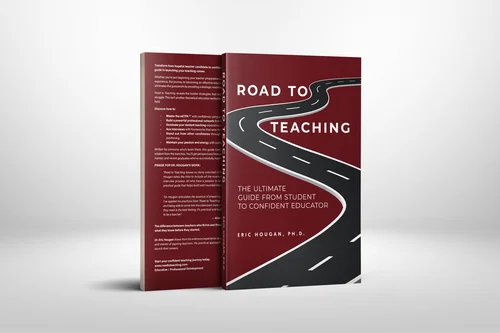
Want the whole road in your bag?
All 51 chapters plus 100+ interview questions, from your first education course to your first contract. Paperback $12.99, Kindle $7.99 on Amazon.