Chapter 35 is about what goes on a teacher resume, section by section: contact information, an objective (or not), education and certification, and experience, plus how to use AI tools without losing your own voice. It is for teacher candidates putting together a resume after student teaching. For a step-by-step walkthrough, see How to Write a Teacher Resume; Chapter 34 covers what to do while you look for that first job.
This is Chapter 35 of 51 from Road to Teaching (2025 edition). Read the whole book free, in order, at Read the Book.
By Dr. Eric Hougan
“The resume explains your experience, what kinds of classes you taught, your school improvement, and any co-curricular activities you directed. The resume will help make the final sale to secure a place on the interview list.”Robert W. Pollock, Ed.D.
As you begin crafting your resume, you may be wondering where to start and what to include. There is a vast amount of resources out there on resume writing including hundreds of books and magazine articles, countless websites, and numerous career workshops devoted to this topic alone. However, the aim here is to provide you with a simple approach to building your resume, as well as some helpful and constructive tips to help make it a shining reflection of your abilities and experience.
When thinking about what to include on your resume, remember that it serves two important functions. First, it highlights your achievements (both professional and academic) as well as your involvement in the community. Secondly, your resume shows to prospective employers all the ways in which you are qualified to fulfill the position(s) you are seeking. A well-crafted resume should highlight the precise skills and expertise you possess that would meet the specifications for the job you desire. Hence, it should come as no surprise that because of your diverse background of experiences, you will need more than one version of your resume. Each position of interest will present its own unique set of duties and responsibilities, and you will want a resume that speaks to the requirements of each particular position.
Every resume has the same components—contact information, education, and experience. Your resume may also have:
- Personal Contact Information
- Objective
- Education & Certification
- Work Experience
Personal Contact Information
This section is self-explanatory; it should include your name, address, phone number, email address (make sure it is professional sounding), your public LinkedIn profile link, and any information that you think would assist an administrator or hiring committee in contacting you. Please note that if you are working from an older resume template you should check that your information is correct.
Consider these additional tips for contact information:
- Use a professional email address, ideally your first and last name
- Include your city and state, but you don’t need your full street address for privacy reasons
- Ensure your voicemail message is professional and clearly states your name
- If you have a professional website or digital portfolio, include that URL
- Double-check that all contact information is current and functional
Example of the Contact Info Section of a Resume
John Smith
City, State 12345
(555) 123-4567
john.smith@email.com
linkedin.com/in/johnsmith
johnsmithteaching.com
Objective
It is not essential to include a career objective in your resume. More and more experts are saying that an objective is a waste of scarce space that could be used to highlight another skill or accomplishment. On the other hand, some hiring managers prefer resumes with an objective because it allows them to easily sort and file resumes according to job openings. If you include one, your objective statement should be concise and specific to the job for which you are applying. The example objective statement below is right to the point and lets the hiring manager know what the job seeker wants.
Many career experts now recommend replacing traditional objectives with professional summaries or highlights sections that showcase your key qualifications rather than simply stating what you want. This approach immediately demonstrates value to the employer.
Example of an Objective on a Resume
Objective: Seeking a secondary mathematics teaching position where I can utilize my strong content knowledge and commitment to differentiated instruction to help all students achieve mathematical proficiency.
Education and Certification
Include here the degrees you have received, name(s) of the school(s) you graduated from, dates of graduation, and any other studies that contribute to your qualifications as a teacher. If you do not have a lot of work experience, then highlight your academic successes, such as awards or honors you have received. Only include your GPA if it is 3.0 or higher. The example below illustrates one way to format the education and certification section of a resume.
Example of Education and Certification Section of a Resume
Education & Certification
Master of Education, Elementary Education, Ohio State University, Columbus, OH, May 2023
Bachelor of Arts, English Literature, Miami University, Oxford, OH, May 2021
Ohio Teaching License: Elementary Education (K-6), Valid through 2028
CPR/First Aid Certified, American Red Cross, 2023
Additional considerations for this section:
- List relevant coursework if it directly relates to the position
- Include any specialized training or workshops
- Note any teaching endorsements or additional certifications
- Mention study abroad or unique educational experiences that add value
Experience
In many resumes, this section is often too cumbersome and wordy. Some misguided job seekers believe their chances are diminished if they have not listed all their skills and experiences. On the contrary, the purpose of your resume is to highlight your most important skills and experiences and show how they relate to the job for which you are applying. You can discuss your skills and experience in more depth during your interview.
Additionally, hiring administrators have limited time, and may skip over long-winded explanations of work history. In writing your resume, prioritize your most important skills and experiences, highlighting them with bullets. Try to emphasize accomplishments and achievements. Numbers and percentages tend to jump out to resume reviewers. Be concise and clear in your writing using action words to begin each skill and experience. The example below provides a bulleted example of a teacher experience section of a resume.
Example of Teaching Experience
Student Teacher, Washington Elementary School, Columbus, OH (Spring 2023)
- Planned and delivered standards-based lessons for 24 third-grade students in diverse classroom setting
- Implemented differentiated instruction strategies resulting in 85% of students meeting weekly learning objectives
- Collaborated with cooperating teacher to develop intervention plans for 5 struggling readers
- Integrated technology tools including Google Classroom and educational apps to enhance student engagement
Action Verbs for Teaching Resumes
- Teaching & Instruction: Delivered, Facilitated, Guided, Mentored, Trained
- Management & Organization: Coordinated, Supervised, Administered, Scheduled, Planned
- Assessment & Evaluation: Analyzed, Measured, Monitored, Documented, Reviewed
- Improvement & Enhancement: Strengthened, Increased, Boosted, Advanced, Elevated
- Collaboration & Communication: Partnered, Consulted, Presented, Negotiated, Corresponded
- Creation & Development: Designed, Established, Implemented, Initiated, Launched
Leveraging AI for Resume Development
Artificial intelligence tools can be valuable assistants in crafting and refining your resume, but they should supplement, not replace, your authentic voice and experiences. Consider these ways AI can support your resume development:
Content Generation and Refinement
- Use AI to help brainstorm action verbs and professional language for describing your experiences
- Ask AI to suggest ways to quantify your accomplishments when you’re struggling to identify measurable outcomes
- Get assistance in tailoring your resume language to match specific job descriptions
- Generate multiple versions of experience descriptions to find the most compelling phrasing
Proofreading and Polish
- Employ AI tools to check for grammar, spelling, and consistency errors
- Use AI to ensure your resume maintains a professional tone throughout
- Get suggestions for improving sentence structure and clarity
- Verify that your formatting is consistent and professional
Strategic Feedback
- Input job descriptions to get AI recommendations on relevant keywords to include
- Ask for analysis of whether your resume effectively highlights your most relevant qualifications
- Get suggestions for improving the overall flow and organization of your content
Sample AI Prompts for Resume Development
- For improving experience descriptions: “I was a student teacher in a 4th grade classroom where I taught math and reading lessons. Help me rewrite this experience using strong action verbs and include measurable outcomes.”
- For tailoring to specific positions: “Here’s my resume and here’s a job posting for an elementary math specialist position. What keywords and skills from the job posting should I emphasize more in my resume?”
- For quantifying accomplishments: “I helped struggling students improve their reading skills during my student teaching. How can I describe this experience with specific numbers or percentages even if I don’t have exact data?”
- For professional language: “I worked as a camp counselor where I supervised kids and planned activities. Help me rewrite this experience using education-focused language that shows transferable teaching skills.”
- For objective statements: “I want to teach high school biology and am passionate about hands-on learning and environmental education. Help me write a compelling objective statement for my resume.”
Important Considerations
- Always review and personalize AI-generated content to ensure it accurately represents your experiences
- Maintain authenticity—don’t let AI completely rewrite your voice or fabricate experiences
- Remember that AI suggestions should align with your actual accomplishments and skills
- Use AI as a starting point for brainstorming, not as a final authority on your content
Additional Resume Advice
Ultimately, your resume should be a one-page reflection of you and everything you can offer to a prospective employer. All of the work that goes into preparing a resume is crucial, from what information to include (or leave out) and down to the style and layout. Consider getting outside opinions on how to improve your resume by asking your program’s career counselor, trusted education professionals, colleagues, family, and friends.
Finally, before you send your resume to prospective employers, proofread it multiple times. Each time you read through, carefully check for spelling and grammatical errors, as many employers will just toss out any resume with such errors.
Additional resume considerations for education positions:
- Format consistency: Use the same font, spacing, and style throughout
- Keywords: Include terms from the job posting to help with applicant tracking systems
- Quantifiable results: Include specific numbers when possible (test score improvements, class sizes, etc.)
- Relevance: Tailor each resume to the specific position and school district
- Length: Keep to one page unless you have extensive relevant experience
- Professional appearance: Use clean, readable fonts and plenty of white space
Consider creating a master resume document that includes all your experiences, then customize shorter versions for specific applications. This approach ensures you don’t forget important experiences while keeping individual resumes focused and relevant.
Finally, remember that your resume is often the first impression you make on potential employers. Invest the time to make it polished, professional, and compelling. A strong resume opens doors to interviews, where you can then elaborate on your experiences and demonstrate your passion for teaching.
Develop multiple versions of your resume tailored to different positions, focusing on specific qualifications and accomplishments that match each job’s requirements. Use AI tools to enhance your writing while ensuring your authentic voice and genuine experiences shine through.
Writing your resume now? See it built step by step in How to Write a Teacher Resume.
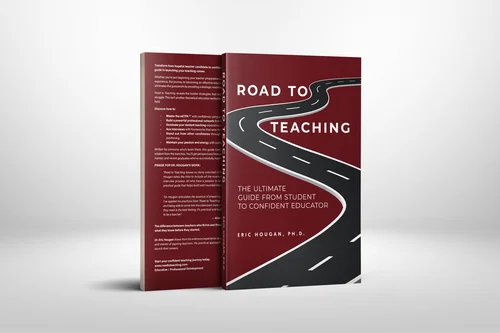
Want the whole road in your bag?
All 51 chapters plus 100+ interview questions, from your first education course to your first contract. Paperback $12.99, Kindle $7.99 on Amazon.