Chapter 34 opens Section III of the book, on finding your teaching job. It is about what to do between the end of student teaching and your first contract: extra courses and micro-credentials, substitute teaching or coaching, and volunteering. It follows Chapter 33 on thanking your network, and when you are ready to apply, the job search guide walks through the next steps.
This is Chapter 34 of 51 from Road to Teaching (2025 edition). Read the whole book free, in order, at Read the Book.
By Dr. Eric Hougan
“It takes a long time to educate a community and it can’t be done by spellbinders, moneybags, hypnotizers, magicians, or Aladdin’s lamp. Character is what matters on a paper.”Harry J. Grant
As student teaching winds down and you prepare for graduation, you may experience some relative calm before the hiring season picks up. School districts will be on the lookout for potential employees starting as early as March, going all the way through to August. During this period, you can increase your chances of being hired by actively networking and diversifying your skill sets.
Seek Professional Development
In the first section of the book Leverage Your Teacher Education Training, teacher candidates were encouraged to improve in their growth areas, specifically pertaining to content knowledge and pedagogy. Now, as you have completed your practicum, reflect on your student teaching experience and ask what areas in your practice could be strengthened through targeted professional development.
Classes and micro-credentials may serve as professional development opportunities. Enrolling in additional classes through your higher education institute or another education organization may broaden your skills and knowledge. Consider pursuing additional endorsements or certification in high-need areas such as ELL (English Language Learners) or Special Education. Even if you do not earn an endorsement or certification, there are numerous benefits to taking additional courses. For one, you will know more about how to meet your students’ learning needs. Next, you will also have a strong foundation should you decide, in the future, to pursue extra certification. Extra courses will also make you more appealing to principals and hiring committees.
Micro-credentials are another venue for you to learn a specific skill or knowledge, demonstrate competency related to this skill or knowledge, and earn a digitized form of certification. There are many organizations and platforms that offer education-related micro-credentials at a reasonable cost, such as the National Education Association and Digital Promise. When you choose a micro-credential you want to pursue based on your teaching and student needs, often there are curated resources and readings to guide your learning. In many cases, once you earn your micro-credential, you will receive a digital badge that you can include on your resume or LinkedIn profile - again further differentiating yourself from other teacher candidates.
Professional development opportunities have expanded significantly:
- Online learning platforms: Coursera, edX, and Udemy offer courses from universities and organizations worldwide
- Educational conferences: Many now offer virtual attendance options, making them more accessible and affordable
- Webinar series: Professional organizations regularly host expert-led sessions on current topics
- Book studies: Join or organize groups focused on current educational literature
Substitute Teach or Coach
You may be thinking “No more coursework!” and this is completely understandable. The good news is that there are many other ways to increase your value as a job candidate that do not require you to take classes or write papers. Substitute teaching and coaching are excellent ways to strengthen your teaching skills and get the proverbial “foot in the door.” They both provide real-world experiences working with students that will extend your skills beyond your practicum experience. While substitute teaching and coaching, this is an excellent time to continue expanding your network.
Remember to keep records on the teachers and schools you substituted in and organizational tools such as your network spreadsheet will make this a breeze (see the Organize Your Contacts strategy, in Section I). Also, while teaching or coaching, remember to try to become a familiar face in the school (see Benefit from Networking in Schools strategy, in Section I).
Substitute teaching offers unique advantages for new graduates:
- Diverse experiences: Exposure to different grade levels, schools, and teaching styles
- Flexible scheduling: Ability to choose assignments that fit your availability
- Income generation: Steady pay while you search for a permanent position
- Networking opportunities: Building relationships with staff who may provide references or job leads
- Skill development: Practicing classroom management and adapting to new situations quickly
Coaching and extracurricular leadership roles provide different but equally valuable benefits:
- Student relationship building: Working with students in different contexts than traditional classroom settings
- Leadership experience: Managing teams, organizing events, and communicating with parents
- School community involvement: Participating in the broader school culture and traditions
- Specialized skills: Developing expertise in areas that may set you apart from other candidates
Volunteer
If you cannot find a substitute teaching or coaching position, then consider becoming active in your local community. Teachers are known for their commitment to their community. Many teachers and administrators volunteer great amounts of their time for causes that are important to them. Find a cause that you are passionate about, such as homelessness, hunger, the environment, and local school improvement.
Start by calling your local city government, or visiting their website, to get a list of volunteer opportunities that might interest you, such as the Scouts of America, Rotary Clubs, Kiwanis, YMCA, Red Cross, and United Way. You may find yourself rubbing shoulders with people in positions to help you obtain that desired teacher job. In addition to helping the community, you are building and using your skills, networking with others, and polishing your resume to reflect your civic-minded activities.
Strategic volunteering can enhance your teaching credentials:
- Literacy programs: Tutoring adult learners or participating in community reading initiatives
- Youth organizations: Working with children and teens in various developmental programs
- Environmental education: Leading nature programs or conservation efforts
- Cultural institutions: Supporting museums, libraries, or cultural centers
When choosing volunteer opportunities, consider how they align with your teaching interests and career goals. Document your volunteer experiences carefully, noting specific skills developed, populations served, and outcomes achieved. These experiences can provide compelling examples during job interviews and demonstrate your commitment to serving others beyond the classroom.
Maintain a professional approach to all post-graduation activities. Whether substitute teaching, coaching, or volunteering, treat each opportunity as a potential pathway to your ideal teaching position. Continue developing your professional network, seeking mentorship, and reflecting on your experiences to refine your teaching practice and career goals.
Remember that this transitional period is also an opportunity for personal renewal and self-care. After the intensity of student teaching, take time to rest, pursue personal interests, and prepare mentally and emotionally for the demands of your first teaching position. The stronger and more balanced you are as a person, the more effective you’ll be as an educator.
Use the time between student teaching and job placement strategically by pursuing additional credentials, substitute teaching, and community involvement that builds your skills while keeping you visible in the education community. These activities often lead directly to job opportunities while enhancing your qualifications.
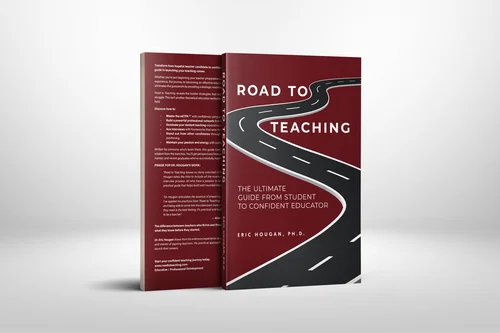
Want the whole road in your bag?
All 51 chapters plus 100+ interview questions, from your first education course to your first contract. Paperback $12.99, Kindle $7.99 on Amazon.