Teacher preparation asks a lot of you, and the habits you build now are the ones you carry into your first classroom. This chapter is for any teacher candidate who is already tired: why perfectionism is a trap, how to set boundaries that hold, and a short list of habits that make a difference.
This is Chapter 6 of 51 from Road to Teaching (2025 edition). Read the whole book free, in order, at Read the Book.
By Dr. Eric Hougan
“Research-based educational strategies and pedagogy are only as good as the person providing them. And if the human providing the strategies is so depleted, worn out, and burned out that he or she can hardly breathe, then the expectation that he or she can provide oxygen to students is unrealistic. And yet this is what we are asking educators to do, day in and day out.”Tina Boogren
Developing awareness of self-care is an important step on your journey to becoming a teacher. Regardless of being a teacher candidate, student teacher, or job applicant, at some point (or regularly), you will be challenged both physically and mentally by the demands of this profession. Attention to self-care is paramount to ensure you are whole and healthy not only for your own personal well-being but for your students and their families. Every child deserves an educator that is present, rested, positive, and passionate about the work. To start your self-care efforts, accept imperfection, set boundaries, build healthy habits, and continue learning.
Ditch Perfectionism
Many teacher candidates identify themselves as perfectionists and this can be a struggle. Think for a moment — do you identify as a perfectionist or have strong tendencies for perfectionism? What are the drawbacks of perfectionism? How might we think about this differently? Dr. Brené Brown, researcher and best-selling author, offers this view on perfectionism from her book The Gifts of Imperfection: Let Go of Who You Think You’re Supposed to Be and Embrace Who You Are:
Perfectionism is not the same thing has striving to be your best. Perfectionism is not about healthy achievement and growth. Perfectionism is the belief that if we live perfect, look perfect, and act perfect, we can minimize or avoid the pain of blame, judgment, and shame. It’s a shield. Perfectionism is a twenty-ton shield that we lug around thinking it will protect us when, in fact, it’s the thing that’s really preventing us from flight (p. 56).
Perfectionism - this “twenty-ton shield that we lug around”— takes shape in different ways for teacher candidates. One way teacher candidates may be weighed down is in their pursuit of the perfect grade or grade point average. This aim for academic perfection may fuel an unhealthy pressure in teacher candidates and this pressure can contribute to the teacher candidate valuing their grade above the learning. In addition, unhealthy expectations may also lead to poor health outcomes. For example, perfectionists pulling those all-nighters to get in that “perfect” paper may face the consequences of falling ill because of a worn-down immune system.
Perfectionism may also inhibit educators from taking healthy pedagogical risks to grow their practice. For instance, teacher candidates that are lesson planning or practicing a teaching method may hold back from trying a new strategy. Playing it safe may stem from a fear of feeling shame and judgment if the attempted new risk — an idea, change, technique, method — falls flat and does not have the desired effect. However, here is the reality: teaching is messy and dynamic. As an educator, you must learn to be comfortable in this messiness. There is no such thing as the perfect teacher or perfect lesson plan, so try to let go of that expectation early on and stop yourself from pretending that it exists.
The digital age has intensified perfectionism for many teachers. Social media platforms showcase curated classrooms and “Pinterest-perfect” lessons that can make new teachers feel inadequate. Remember that these images rarely show the real process—the failed attempts, the late nights, and the messy learning that happens along the way. What matters most is student learning and growth, not picture-perfect bulletin boards or flawless execution.
All in all, one must learn to accept the imperfect by letting go of the unreasonable expectations of perfection and reach outside of one’s comfort zone to take healthy risks. Have a zany idea to engage your students? Go for it. But, keep in mind, with imperfection, comes plenty of failures, missteps, and mistakes. However, do not let that feeling of defeat overcome you as it is in your failures where you will truly begin to grow as an educator. Own these failures, reflect upon them and try again. Finally, work to be a role model for your students by showing that failing is healthy and often necessary in order to grow and learn.
Set Boundaries
Strive to set healthy professional boundaries early on because you will quickly find that the demands are high in teacher preparation and the field of education, in general. To put it plainly, the work never stops. The sooner you realize and can accept this reality, the sooner you can take relief in pulling back and focusing on you. As a teacher candidate, there will always be a bit more you can do to improve or prepare for. As an educator, there will always be grading, lesson planning, answering emails, and other countless tasks to complete. The work of being a teacher can and will quickly overshadow your personal life if you are not mindful of setting boundaries. And it is because educators care so deeply about the students that they often allow the professional work to become all-consuming of their time, attention, and energy. Remember though, while being a teacher is an integral part of your identity, it is not your full identity. Setting healthy boundaries as an educator allows you to tend to the other important parts of your life: your family, friends, and interests/hobbies. Boundaries are personal and will look different for each person. For example, you may make it a rule not to check your work email after a certain time and limit working on the weekends. Creating these work boundaries will take a bit of experimenting to determine what works best for you. The most important part though is that you try something and then reflect on how it is working for you.
Technology has made boundary-setting both more important and more challenging. The ability to access school email and learning management systems 24/7 means many teachers never truly disconnect from work. Consider creating tech boundaries such as:
- Using separate devices or accounts for personal and professional use
- Setting up “do not disturb” hours on your devices
- Establishing an “email curfew” after which you won’t check messages
- Creating dedicated tech-free spaces or times in your home
Next, communicate what these boundaries are to those who will be affected by them. For instance, you might tell your partner that you will not write or grade papers after a certain time — that’s your cutoff. This sharing will help create some amount of accountability to adhering to your boundaries. You might also communicate appropriate boundaries to students and parents about when you’re available to respond to messages. Finally, give yourself grace if you don’t fully live up to these guidelines you have set. The purpose is not perfection, but self-preservation, allowing you to tend to your whole self.
Form Healthy Habits
Next, consider incorporating one (or several) of the self-care habits below into your daily or weekly routine. Embracing and sticking to even one new habit can make a noticeable difference in your well-being. To help get you started, below are five useful self-care habits listed:
- Drink plenty of water or tea. Try to drink a full glass of water right after waking up to immediately hydrate the body. Also, consider buying a cheap coffee-maker and bring it to your classroom. Throughout the day, you can enjoy one or two cups of green tea. You are likely to find your energy is so much greater because of this habit.
- Get massages. Schedule massages regularly. Often with a medical doctor’s referral for massage therapy, insurance will cover most of the expense. Check with your insurance provider about your coverage.
- Practice Gratitude. In the morning, build a routine of thinking of three unique things that you are grateful for each day. This habit will help shift you into a more positive mindset.
- Take a nap. Consider carving out 10-20 minutes a day to nap. Finding time to do so may be difficult, but consider your lunch break or right after school. Routinely napping can have a noticeable improvement to your physical and mental health. To learn more about the researched benefits of naps, read Daniel Pink’s book, When: The Scientific Secrets of Perfect Timing.
- Go for a walk. Set a goal to walk at least three times a week. Walking gives you space to brainstorm, strategize, be present, or focus on thoughts of gratitude.
Many teachers have found mindfulness practices particularly beneficial for managing stress. Apps like Calm, Headspace, or Insight Timer offer guided meditations specifically designed for educators. Even five minutes of mindful breathing before school or during your planning period can help reset your nervous system and improve focus. Here are other self-care habits to consider:
- Take nature walks. Walk slow, look for wildlife and listen.
- Set a workout routine.
- Start a garden (or bring a plant to put on your desk at work!)
- Watch less TV and reduce social media consumption.
- Make yourself a priority. Block out time on your schedule just for you.
- Meet an old friend for coffee or drinks.
- Start a journal. Set a timer for 3 minutes and write freely.
- Practice mindful breathing exercises.
- Wake up 15-30 minutes before you must get up. These extra minutes will help ease you into your day.
- Take a long bath.
- Attend a comedy show with a friend.
- Channel your creative juices: write or do art.
- Read for enjoyment.
- Practice intentionality. Focus on one task at a time.
- Visit local libraries and museums. Don’t watch the clock, let yourself wander and explore.
- Join a teacher support group, either in-person or online, where you can share challenges with others who understand.
- Consider therapy or counseling as preventative mental health care, not just for times of crisis.
Continue You
Finally, this book does not pretend to be a comprehensive self-care resource, but rather provides some insight by offering a few key strategies - be imperfect, set boundaries, and develop healthy habits - to start you on your journey of self-care. Therefore, it is incumbent on you to invest time in learning more about self-care and building healthy habits. To continue learning, become aware of the incredible people doing work in this area. To start, lean into social media. Social media offers community and resources around self-care, especially as self-care intersects with education. Search #selfcare or #teacherhealth on Twitter or Facebook to discover other educators, incredible ideas, and thought-leaders on this important topic.
Remember that self-care isn’t selfish—it’s essential. By taking care of yourself, you’re ensuring that you’ll have the energy, enthusiasm, and emotional capacity to be the teacher your students need. Your commitment to self-care is a commitment to your longevity and effectiveness in the profession.
Suggested Reading
Tina Boogren, Take Time for You: Self-Care Action Plans for Educators (Using Maslow’s Hierarchy of Needs and Positive Psychology) (Bloomington, Solution Tree Press, 2018).
Elena Aguilar, Onward: Cultivating Emotional Resilience in Educators (San Francisco, Jossey-Bass, 2018).
Reject perfectionism and establish healthy boundaries now, before the demands of teaching overwhelm you. Consistent self-care habits—from staying hydrated to practicing gratitude—aren’t luxuries but necessities that enable you to serve students effectively while maintaining your well-being throughout your career.
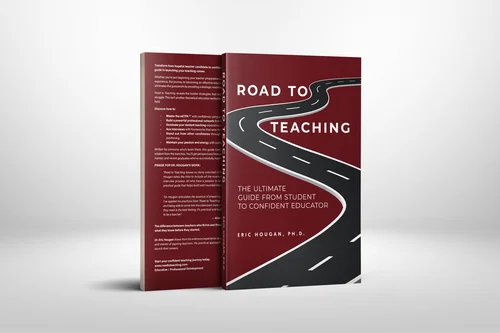
Want the whole road in your bag?
All 51 chapters plus 100+ interview questions, from your first education course to your first contract. Paperback $12.99, Kindle $7.99 on Amazon.