Teaching changes fast, and the teachers who keep growing are the ones who know where to look. This chapter is for teacher candidates who want to stay current without getting buried: where to read the education news, which research databases to use, and which professional organization fits your subject, with a table by content area. It pairs well with Chapter 3 on keeping a professional reading list.
This is Chapter 19 of 51 from Road to Teaching (2025 edition). Read the whole book free, in order, at Read the Book.
By Dr. Eric Hougan
“We now accept the fact that learning is a lifelong process of keeping abreast of change. And the most pressing task is to teach people how to learn.”Peter F. Drucker
To further prepare for student teaching and, as part of being a lifelong learner, you should be aware of the latest best practices in research. You can keep abreast of changes by joining general education and content-specific organizations, and by reviewing educational journals and websites. These resources can provide you with curriculum ideas, connections to experts, publications, conferences, e-workshops, and job banks.
Resources and Organizations
Keep up-to-date on the latest education news and trends by reading Education Week (https://www.edweek.org)—a print and online newspaper that covers K-12 education. Education Week further offers a free job search service. Check with your school’s library to see if they may have an institutional license which could mean have free access.
Digital platforms have revolutionized how educators access professional resources. Podcasts like “Cult of Pedagogy,” or “The Google Teacher Tribe” offer convenient ways to stay current while commuting or exercising. Educational YouTube channels provide visual demonstrations of teaching strategies and classroom management techniques.
Consider joining Phi Delta Kappa (PDK) (https://www.pdkintl.org). PDK is one of the premier education organizations. It publishes The Kappan - a practitioner-focused journal. The Kappan features articles about educational research, practice, and policy, as well as blogs and columns on school and district leadership, media coverage of education, legal issues in the field, state and federal politics, and more. PDK also has hundreds of local chapters, mostly on college campuses, which provides wonderful opportunities to network. Other benefits include scholarships and conferences focused on the pre-service teacher.
Another practice to stay current is by locating research online. Education Resources Information Center (ERIC), supported by the Department of Education, is the world’s premier database of journal and non-journal education literature, with nearly 1.2 million citations dating back to 1966. This site also provides access to full-text materials at no charge. ERIC’s website is https://www.eric.ed.gov/. This is an ideal place to begin research on almost any education topic. Another recommended site is Google Scholar. Use these web resources as a springboard to implement research-based practices in your own classroom to improve student learning.
Professional learning networks (PLNs) have become essential for modern educators. Twitter hashtags like #edchat, #teacherlife, or subject-specific tags provide access to global conversations about education. LinkedIn groups focused on education offer more formal networking and professional development opportunities.
Many educational organizations now offer micro-credentials or digital badges that allow you to demonstrate specific competencies. Organizations like Digital Promise, ISTE (International Society for Technology in Education), or the National Art Education Association provide these targeted professional development opportunities that can enhance your résumé and skill set.
In the table below, educational organizations are listed that focus on specific content areas. Find your area of concentration and visit the organization’s website to explore their teacher resources and tools.
Table: Professional Organizations by Concentration
| Content Area | Professional Organization |
|---|---|
| Art Education | National Art Education Association (NAEA) |
| Business Education | National Business Education Association (NBEA) |
| English Language Arts | National Council of Teachers of English (NCTE) |
| Foreign Language | American Council on the Teaching of Foreign Languages (ACTFL) |
| Health & Physical Education | SHAPE America (Society of Health and Physical Educators) |
| Mathematics | National Council of Teachers of Mathematics (NCTM) |
| Music Education | National Association for Music Education (NAfME) |
| Science | National Science Teachers Association (NSTA) |
| Social Studies | National Council for the Social Studies (NCSS) |
| Special Education | Council for Exceptional Children (CEC) |
| Technology Education | International Society for Technology in Education (ISTE) |
Beyond traditional subject-area organizations, consider joining groups focused on educational approaches or student populations you’re passionate about. Examples include:
- Association for Supervision and Curriculum Development (ASCD)
- International Literacy Association (ILA)
- National Association for Gifted Children (NAGC)
- Teachers of English to Speakers of Other Languages (TESOL)
- National Association of Elementary School Principals (NAESP)
- Learning Forward (professional development organization)
Many organizations offer student memberships at reduced rates, making it affordable to join multiple groups during your teacher preparation program. These memberships often include access to journals, webinars, conference discounts, and networking opportunities that can significantly enhance your professional development.
Consider setting up a systematic approach to staying current with educational research and trends. This might include:
- Subscribing to newsletters from key organizations
- Setting aside time each week to read educational blogs or articles
- Joining book study groups focused on educational literature
- Attending virtual conferences and webinars
- Following educational thought leaders on social media
- Creating a professional reading list and tracking your progress
Remember that staying current in education isn’t just about consuming information—it’s about critically evaluating new ideas and considering how they might apply to your specific teaching context. Develop the habit of asking questions like: “How does this research apply to my students?” “What evidence supports this approach?” and “How might I adapt this strategy for my classroom?”
Finally, consider contributing to the professional conversation by sharing your own insights and experiences. This might involve writing blog posts, participating in online discussions, presenting at conferences, or simply engaging thoughtfully with content shared by other educators. Active participation in professional learning communities will deepen your own understanding while building your reputation as a thoughtful educator.
Develop systematic habits for consuming current educational research through professional organizations, digital resources, and learning communities. Staying informed about best practices and emerging trends will enhance your teaching effectiveness and demonstrate your commitment to professional growth.
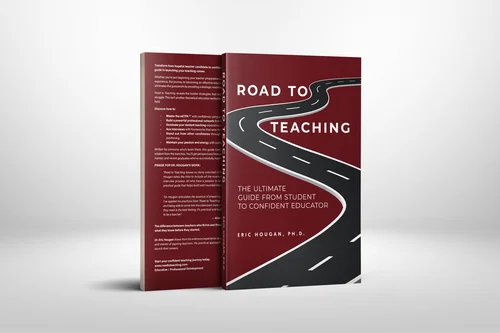
Want the whole road in your bag?
All 51 chapters plus 100+ interview questions, from your first education course to your first contract. Paperback $12.99, Kindle $7.99 on Amazon.