Chapter 45 is about practicing for a teacher interview until your answers come easily: where to find likely questions, how to use AI to tailor them to a job posting, and how to record yourself and get feedback. It is for teacher candidates with interviews coming up who want a practice routine, not a script. It follows Chapter 44 on framing your response, and the teacher interview questions page gives you questions to practice with.
This is Chapter 45 of 51 from Road to Teaching (2025 edition). Read the whole book free, in order, at Read the Book.
By Dr. Eric Hougan
“The passion to teach is already inside your heart, but you need to secure a position you truly want and work in the district that best meets your needs. To reach that goal, you need to prepare for the interviews you will receive.”Robert W. Pollock, Ed.D.
Feeling prepared and ready for your upcoming interview is a surefire way to boost self-confidence and increase your chances of being hired for your dream teaching position. A prepared job candidate will be ready to address any question in an interview. Certainly, there will be an unexpected question or two, but the effective candidate will always be able to respond to interview questions in a thoughtful and deliberate manner. Proper preparation consists of ongoing reflection, research, and practice.
To start, reflect on your experiences and trainings that have brought you to this point. Read the reflective notes in your journal, consider the coursework and books that have inspired you, and think back on your student teaching experiences. This exercise will help you realize that you are fully prepared and worthy to start your journey as a teacher.
Next, research frequently asked questions for a teacher interview, especially for the grade-level or subject-area you are applying for. A worthwhile starting point is with your career counselor and education network. Someone in your network may have knowledge of- or access to the school or district interview questions. Be mindful that while some schools or districts share their interview questions, others may not. Therefore, please be ethical in your approach. Also, you can find a comprehensive list of over 100 interview questions in the Appendix of this book. These specific interview questions were curated from dozens of educators’ real-life experiences applying for teaching jobs, from all around the country. In general, most teacher interview questions typically relate to one or more of the following topics:
- Assessment
- Classroom management
- Cultural competency and diversity
- Discipline
- Family communication
- Educational technology
- Instruction
- Philosophy or your pedagogical approach
- Subject-matter or grade-level specific
Leveraging AI for Targeted Interview Preparation
Artificial intelligence can be particularly valuable in helping you prepare for specific positions by analyzing job postings and creating personalized interview questions based on your unique background and the role requirements.
Using AI to Analyze Job Postings: AI can help you identify the key themes, requirements, and priorities mentioned in job listings, then generate likely interview questions based on these elements. This targeted approach ensures you’re preparing for questions most relevant to the specific position.
Sample AI Prompts for Interview Preparation:
- For generating targeted questions: “Here is a job posting for a 4th grade teaching position: [paste job posting]. Based on the requirements and priorities mentioned, generate 10 likely interview questions I should prepare for.”
- For connecting your background to position requirements: “Here’s my resume and the job posting I’m applying for: [insert both]. What aspects of my experience should I emphasize, and what potential interview questions might focus on areas where I need to demonstrate growth or learning?”
- For philosophy-based question preparation: “Based on my education philosophy statement: [insert statement] and this job posting: [insert posting], help me brainstorm how to connect my core beliefs to the specific needs and priorities of this position.”
- For experience-based response development: “I’m applying for [specific position] and expect to be asked about [specific topic like classroom management]. Based on my resume: [insert relevant experiences], help me brainstorm concrete examples and stories I can use to demonstrate my capabilities in this area.”
Developing Your Practice Routine
A logical next step after securing a list of sample interview questions is to practice repeatedly and often. To begin, select one to two interview questions that relate to the aforementioned topics and jot down your how you will draft response to these questions. Bulleting your key responses works just fine, but also consider creating flashcards with these questions and your responses to help you practice.
Once you have created an outline of your answers for the chosen interview questions, you are now ready to start verbally practicing your responses by recording yourself. You can start by doing a simple audio recording using an audio recorder or an app (likely there is one on your smartphone or there is an audio record feature on Evernote). Record yourself reading the interview questions and saying your responses. Feel free to reference your notes during your first few attempts as it will help to build confidence as you practice.
After each audio recording, intently listen to yourself, taking the time to analyze and reflect on the substance of your response, voice inflections, and delivery. Consider these questions:
- How satisfied are you with your response?
- Was your response succinct?
- To what degree did you show confidence and passion in your responses?
- Does your desire to teach children come through?
- Did you avoid saying “um” a lot?
- Are you speaking loudly enough for the interviewer to hear you?
- Do you convey confidence that you are the “right one” for this job?
Continue practicing until you feel mostly satisfied and confident in your answers, and are able to respond to the interview questions with a good amount of automaticity. To be clear, it may take recording yourself a dozen times or more times to feel good about your response for a single interview question.
Video Practice and Feedback
Another technique to prepare you is to videotape yourself in a mock interview. With a family member or a friend, find a quiet spot to set up a video camera to record your answers to your practice interview questions. While this may seem awkward at first, by reviewing the videotape you will see yourself from the point of view of the interviewer and catch non-verbal nuances.
A further benefit to practicing with someone else is feedback. Ask your family member or friend to provide feedback on your performance. They may find something to improve on that you may have overlooked.
Consider these additional video practice strategies:
Professional Setup: Dress as you would for the actual interview and practice in a setting similar to what you might encounter. This helps you become comfortable with your professional presentation.
Varied Questions: Have your practice partner ask questions in different orders and styles to simulate the unpredictability of real interviews.
Time Management: Practice keeping your responses within appropriate time limits while still being thorough and engaging.
Collaborative Practice
Peer Practice Groups: Form study groups with other teacher candidates to practice interviews together. This provides multiple perspectives and reduces the pressure of practicing alone.
Professional Feedback: Seek opportunities to practice with education professionals such as professors, administrators, or experienced teachers who can provide expert feedback.
Career Services: Take advantage of your university’s career services for mock interviews and professional guidance.
Content-Specific Preparation
Subject Area Focus: Research questions specific to your teaching area. Math teachers might be asked about differentiation strategies, while English teachers might discuss literacy approaches.
Grade Level Considerations: Elementary questions often focus on classroom management and parent communication, while secondary questions might emphasize content expertise and student engagement.
Special Populations: Prepare for questions about working with English language learners, students with disabilities, and gifted learners, regardless of your specific endorsements.
Important Considerations When Using AI
Maintain Authenticity: While AI can help you identify likely questions and brainstorm response strategies, ensure that your final answers reflect your genuine experiences, values, and teaching philosophy.
Use as a Starting Point: AI suggestions should spark your own thinking and preparation rather than providing scripted responses you memorize.
Continue practicing until you feel mostly satisfied and confident in your answers, and are able to respond to the interview questions with a good amount of automaticity.
Remember that the goal isn’t to memorize perfect responses, but to develop confidence and fluency in discussing your teaching philosophy, experiences, and approaches. The time you invest in practice will pay dividends during your actual interviews. You’ll feel more confident, deliver more polished responses, and be better able to handle unexpected questions because you’ve developed strong foundational skills through deliberate practice.
Suggested website Road to Teaching: Teacher Interview Questions (https://roadtoteaching.com/teacher-interview-questions/) This website has the largest collection of teacher interview questions.
Practice interview responses systematically using recording technology and feedback from others, while leveraging AI tools to generate questions specific to positions you’re targeting. The confidence you build through deliberate practice will enable you to perform at your best when opportunities arise.
Interviewing soon? See how this chapter turns into an answer: Tell Me About Yourself: Teacher Interview Sample Answer
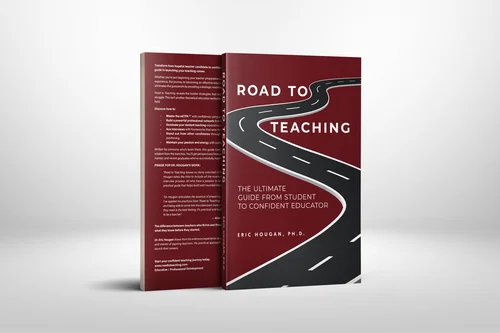
Want the whole road in your bag?
All 51 chapters plus 100+ interview questions, from your first education course to your first contract. Paperback $12.99, Kindle $7.99 on Amazon.