Not every student teaching placement is a good match, and most teacher candidates do not get to pick their cooperating teacher. This chapter is for student teachers whose mentor is too rigid or too loose, with practical steps to stay positive, keep the relationship working, and still grow during the practicum. It picks up where Chapter 20 on your first contact leaves off, and this post on working with your cooperating teacher covers the day-to-day side.
This is Chapter 21 of 51 from Road to Teaching (2025 edition). Read the whole book free, in order, at Read the Book.
By Dr. Eric Hougan
“There is no such thing as a self-made man. You will reach your goals only with the help of others.”George Shinn
In education, as with any field, you will find yourself working side-by-side with people from a variety of backgrounds with personalities and approaches that will differ from your own. Student teaching will be no exception. Since you will be under the tutelage of your mentor (cooperating) teacher, you will be required to work closely and professionally with him or her throughout your practicum. However, teacher candidates may run into problems if the cooperating teacher they are paired up with is a bad fit. Depending on your preparation program, you may not have much say in the student teaching placement as teacher education programs often determine the placement for you and will usually only take into consideration your preferences of district and grade-level. Therefore, your choice of cooperating teacher is often times completely out of your control. You may be partnered with a teacher that is supportive and open to new ideas and approaches or, on the other side of the spectrum, you may be paired with a teacher that is inflexible and unsupportive.
A common “bad” experience in student teaching may begin with a controlling cooperating teacher that demands, if not requires, that a certain curriculum is covered and delivered in a prescribed way. Such cooperating teachers may seem to be trying to create carbon copies of themselves, but, under these conditions, only manage to stifle the creativity of the student teacher. Alternatively, you may have a cooperating teacher that is not structured, more free-flowing and seems to create lesson plans while driving to work. This loose framework can cause problems because the student teacher is struggling to get their hands on something concrete (such as a curriculum) that they can work from.
If either of these cases happens to you, do not despair; there are proactive steps you can take to keep your practicum on track.
First, approach the situation with a positive and forward-looking attitude. As much as you may feel frustrated by your placement, or feel that it is unfair, giving in to those negative feelings will only make matters worse. Keep in mind the real reason you are there is to teach. Your students deserve a teacher who is happy and excited to see them, and who is fully invested in their continued growth. Learning to set aside the negative feelings and “leave them at the door” is a critical skill that will be crucial throughout your entire teaching career.
Secondly, despite how you may be feeling, continue working towards building a positive relationship with the cooperating teacher. Although the situation may be delicate, it is important for you to regularly communicate some of the ideas you would like to try. If the cooperating teacher does not take to any of your ideas, solicit their advice on what modifications can be made in order for it to work in their classroom. A majority of the time this buy-in approach will work as it shows the cooperating teacher that you respect their teaching style and learning environment.
Consider different learning and teaching styles as potential sources of conflict. Some teachers prefer highly structured environments while others thrive in more flexible settings. Some focus heavily on content delivery while others prioritize student-centered learning. Rather than viewing these differences as obstacles, try to see them as opportunities to expand your own teaching repertoire. You might ask yourself: “What can I learn from this approach that I hadn’t considered before?”
Document your experiences and reflections throughout the process. This serves multiple purposes: it helps you process challenging situations, provides material for your professional portfolio, and creates a record that could be useful if more serious interventions become necessary. Focus your documentation on specific behaviors, conversations, and teaching practices rather than general complaints.
Seek support from your university supervisor when needed. These professionals are experienced in helping student teachers navigate challenging placements and can offer strategies you might not have considered. They can also serve as mediators if communication with your cooperating teacher becomes particularly difficult.
Look for alternative learning opportunities within the school. If your cooperating teacher’s style doesn’t align with your learning needs, ask permission to observe other teachers, attend professional development sessions, or participate in school-wide initiatives. This demonstrates your commitment to learning while providing additional perspectives on teaching.
In the end, if all else fails, remember the old adage oft-repeated in education: “it is easier to ask for forgiveness than permission.” However, do not do anything so drastic that it would jeopardize your relationship with the cooperating teacher or risk your final grade for student teaching. Ultimately, while student teaching is an important step, it is still just one part of your journey to becoming a teacher. No matter how tough it is, keep in mind that you only have to work with this teacher for a short and finite amount of time, and it will be over sooner than you realize. In a short time, you will have your own classroom where you can freely implement your pedagogical and curriculum ideas.
Remember that even challenging cooperating teacher relationships can provide valuable learning experiences. Working with someone whose style differs significantly from your own can help you develop important professional skills like diplomacy, flexibility, and creative problem-solving. These skills will serve you well when you encounter difficult colleagues, administrators, or situations throughout your teaching career.
Finally, maintain perspective about the overall value of your student teaching experience. While the relationship with your cooperating teacher is important, you’re also gaining experience with real students, practicing classroom management, implementing lesson plans, and developing your professional identity. Focus on what you can control and learn from, rather than dwelling on aspects of the situation that are beyond your influence.
Approach differences in teaching style as learning opportunities rather than obstacles, maintain professionalism even in challenging situations, and remember that this finite experience is preparing you for the autonomy of your own classroom. Every cooperating teacher relationship teaches valuable lessons about collaboration and adaptability.
Interviewing soon? See how this chapter turns into an answer: How to Work With Your Cooperating Teacher
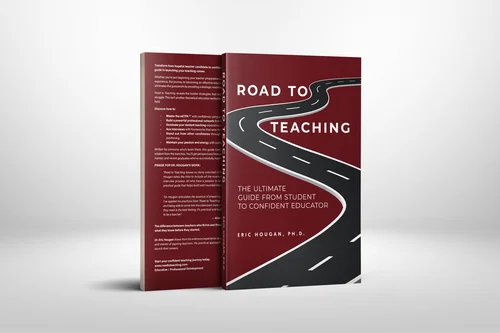
Want the whole road in your bag?
All 51 chapters plus 100+ interview questions, from your first education course to your first contract. Paperback $12.99, Kindle $7.99 on Amazon.