Get the Edge: Practice Interview Questions

Photo by Jose Aljovin on Unsplash
Feeling prepared for your upcoming interview is a surefire way to boost your confidence and your chances of being hired for the teaching position you actually want. A prepared candidate can address almost any question thoughtfully. There will always be a surprise or two, but effective candidates respond with composure because they practiced, not because they got lucky.
Proper preparation is not cramming the night before. In Road to Teaching I describe it as an ongoing cycle of reflection, research, and practice. Here is how I coach my own candidates through each part.
Start with reflection
Before rehearsing a single answer, look back at the experiences and training that brought you here. Reread the reflective notes in your journal, revisit the coursework and books that inspired you, and think back on your student teaching. This exercise does two things: it surfaces the specific stories that will make your answers credible, and it reminds you that you are fully prepared and worthy to start your journey as a teacher.
Research the questions you will actually face
Next, research frequently asked questions for your grade level or subject area. Your career counselor and education network are a worthwhile starting point; someone may have knowledge of, or access to, a school or district's interview questions. Some districts share them openly and others do not, so be ethical in your approach. Most teacher interview questions relate to a predictable set of topics: assessment, classroom management, cultural competency and diversity, discipline, family communication, educational technology, instruction, and your philosophy or pedagogical approach. Our teacher interview questions hub organizes real questions by these themes, and the book's appendix collects more than 100 of them, curated from educators' real hiring experiences around the country.
Let AI target your preparation
One newer technique I teach: use AI to prepare for the specific position, not interviews in general. Paste the job posting into an AI tool with a prompt like this:
One caution, straight from the book: use AI as a starting point, not a script. Your final answers must reflect your genuine experiences, values, and teaching philosophy, because authenticity is exactly what committees are listening for.
Practice out loud, then listen to yourself
Reading answers in your head is not practice. Draft bullet-point outlines or flashcards for one or two questions at a time, then record yourself answering out loud on your phone. After each recording, listen intently and ask yourself: Was my response succinct? Did I show confidence and passion? Does my desire to teach children come through? Did I avoid saying "um" a lot? Am I speaking loudly enough? To be honest with you, it may take recording yourself a dozen or more times to feel good about your response to a single question. That repetition is the point: you are building automaticity, so the structure holds even when nerves hit.
Then go to video, and get feedback
With a family member or friend, set up a mock interview on video. Dress as you would for the real thing, have your partner vary the order and style of questions, and keep your responses inside realistic time limits. Reviewing the tape shows you what the committee will see, including the non-verbal habits you would never catch otherwise, and a practice partner will spot things you overlooked. Peer practice groups with other candidates and your university's career services mock interviews add expert feedback on top.
Do this once at minimum: a full, timed mock interview out loud with feedback. It surfaces the rambling answers that no amount of silent review will ever find.
As you practice, structure every answer with the five-step response framework. Practice and structure together are what turn anxiety into confidence.
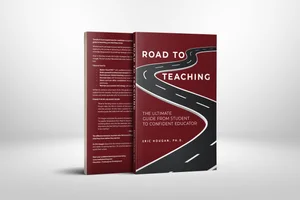
Road to Teaching: The Ultimate Guide
100+ real teacher interview questions, the five-step answer framework, and AI-powered preparation strategies, from teacher training to your first contract.
Get the book on Amazon →Frequently asked questions
How should you practice for a teacher interview?
Use a cycle of reflection, research, and practice: mine your student teaching for real examples, research questions for your grade level and subject, then rehearse out loud, first with audio recordings you review, then in a timed video mock interview with feedback.
What questions are most commonly asked in teacher interviews?
Most questions relate to assessment, classroom management, cultural competency, discipline, family communication, educational technology, instruction, and your teaching philosophy. Prepare a real example for each theme.
How far in advance should you prepare for a teacher interview?
Start weeks out. Expect to record yourself a dozen or more times per question before your answers feel automatic. Early reflection and repeated out-loud practice are what produce calm, confident answers on interview day.