Pedagogy & Instruction Interview Questions & Answers
The instruction questions hiring committees ask most — differentiation, lesson planning, engagement, and assessment — each with a proven framework so you can show you teach every student, not just deliver content.
How to answer any pedagogy and instruction question
Understand the intent
Hear the real question. “Differentiated instruction” is really about whether you can reach diverse learners with adaptive teaching.
State your value
Open with a belief: every student deserves instruction that meets them where they are and moves them forward.
Describe your approach
Get concrete: flexible grouping, multiple ways to show learning, varied content delivery, and checks for understanding.
Explain the benefit
Tie it to outcomes: more students access the lesson, stay engaged, and master the objective.
Give a real example (optional)
A short, true story lands it — a lesson you adapted on the fly when an exit ticket showed half the class wasn't there yet.
Sample question: “Explain how you use differentiated instruction in the classroom.”
“I believe every student deserves instruction that meets them where they are, so I plan in tiers: flexible grouping by skill, multiple ways to show mastery, and content offered visually, verbally, and hands-on. When an exit ticket shows a gap, I re-teach in a small group the next day, so no one gets left behind.”
TEACHING
PREP KIT
The Teacher Interview Prep Kit
- The 10 most-asked interview questions
- A proven framework for answering each
- Space to draft your own answers
15 most common pedagogy and instruction questions
Each answer applies the framework: state a value, describe a concrete approach, connect it to student learning.
Explain how you use differentiated instruction in the classroom.
Lead with belief — every student deserves instruction that meets them where they are. Get concrete: flexible grouping, tiered tasks, and multiple ways to show mastery. The benefit is that more students access and master the objective.
Describe your teaching style.
Name a clear value, then the practices that express it — student-centered, active, data-informed. Avoid labels for their own sake; show how your style keeps students doing the thinking, not just receiving it.
Describe your ideal lesson.
Walk a clear arc: a hook, a stated objective, modeling, guided then independent practice, and a check for understanding. Tie each piece to engagement and mastery so the structure has a purpose.
Describe how you plan your lessons.
Start from standards and the learning objective, then backward-plan the assessment and activities. Build in differentiation and checks for understanding so planning is about student outcomes, not just covering content.
Full response strategy →What role do standards play in your classroom?
Standards are the destination, not a script. Show how you unpack them into student-friendly objectives and aligned assessments, then keep flexibility in how students get there. Clarity benefits every learner.
Provide an example of a successful lesson you created and used.
Pick one real lesson and tell the arc: the objective, what students did, how you knew it worked, and what you'd refine. Concrete evidence of learning is more convincing than describing it in the abstract.
How do you keep students engaged 90-100% of the time?
Engagement is a design choice, not luck. Use total-participation techniques like turn-and-talk and mini-whiteboards, brisk pacing, relevance, and frequent checks. Active students leave fewer gaps for disengagement.
Describe a strategy you used to maximize the learning potential of all students.
Choose a strategy with reach — scaffolding, tiered tasks, or strategic grouping — and show how it lifted both strugglers and high achievers. Always anchor it to evidence that learning improved.
How would you decide what should be taught in your classroom?
Ground decisions in standards, curriculum, and student data — not preference. Show how you prioritize essential learning and adjust based on where students actually are.
What is your philosophy on homework?
State a purposeful belief: homework should reinforce learning, not pile on busywork. Show how you keep it meaningful, manageable, and equitable, then connect it to mastery rather than compliance.
Describe your use of auditory, visual, and hands-on teaching techniques.
Show you present content in multiple modes so more students access it — visuals and graphic organizers, clear verbal explanation, and hands-on practice. Multimodal teaching widens the door to the same objective.
Have you team-taught? What is your opinion on it?
Frame co-teaching as a benefit to students: more support, more perspectives, smaller effective groups. Share how you'd plan and divide roles so collaboration stays focused on learning.
How would you meet the needs of English Language Learners?
Lead with high expectations plus strong supports: visuals, sentence frames, vocabulary scaffolds, and peer partnering. The goal is full access to grade-level content, with language support layered in.
Describe adaptations you have used with students with special needs.
Start from the IEP and partner with specialists. Name concrete adaptations — chunked tasks, extended time, modified materials — so students access the same learning targets as their peers.
How will you ensure students understand the lesson's learning objectives?
Make objectives visible and check them constantly: post the objective, share success criteria, and use formative checks throughout. Then re-teach where the data shows gaps — understanding is verified, not assumed.
“Dr. Hougan's passion and book directly contributed to my success landing contract after contract.”— Tessa Acay, Third-Year Teacher
Pro tips for pedagogy and instruction questions
Show evidence-based practice
Reference research and proven strategies that support your instructional methods, so your teaching reads as grounded, not guesswork.
Emphasize student-centered learning
Focus on how your choices benefit students rather than what's convenient for you, adapting based on student needs and data.
Integrate assessment
Explain how you use formative and summative checks to inform instruction — the cycle of teach, assess, adjust, and re-teach.
Get interview-ready for every question
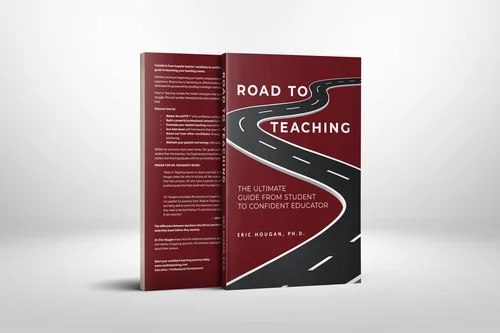
Pedagogy and instruction is one category. Road to Teaching covers the rest with the same framework and worked examples, plus behind-the-table perspectives from a principal and a career counselor — and the whole journey from student teaching through signing your first contract.