Grade-Level Teacher Interview Questions & Answers
The questions hiring committees ask to test your fit for elementary, middle, or high school — each with a proven framework so you can show developmental knowledge and age-appropriate practice.
How to answer any grade-level question
Understand the intent
Hear the real question. “What should a kindergartner learn?” is really testing whether you know what's developmentally appropriate.
State your value
Open with a belief tied to the age group: build foundations and belonging in elementary, identity and engagement in middle, independence and relevance in high school.
Describe your approach
Get concrete with grade-appropriate practices: play-based literacy, structured choice for adolescents, real-world application for older students.
Explain the benefit
Students get what they need for their stage — ready for the next grade, engaged now, and growing toward independence.
Give a real example (optional)
A short, true story lands it — a routine or lesson that met students exactly where their development was.
Sample question: “What are the most important things a child should learn in kindergarten?”
“I believe kindergarten builds social-emotional foundations while introducing academics through play. So I prioritize social skills and independence alongside phonemic awareness and number sense, taught through hands-on, playful routines, so children leave ready to learn and confident in school.”
TEACHING
PREP KIT
The Teacher Interview Prep Kit
- The 10 most-asked interview questions
- A proven framework for answering each
- Space to draft your own answers
Grade-level interview questions, by level
Each answer applies the framework: state a value, describe a concrete approach, connect it to student learning.
Elementary (K–5)
Foundational skills, developmental appropriateness, and building strong learning foundations.
What are the most important things a child should learn in kindergarten?
Lead with developmental belief: kindergarten builds social-emotional foundations while introducing academics through play. Name priorities — social skills, independence, phonemic awareness, number sense — and tie them to a confident start in school.
How would you help a child who is struggling to read?
Diagnose before you remediate. Pinpoint the gap — phonemic awareness, phonics, fluency, or comprehension — then target it with explicit instruction and frequent practice. Early, specific intervention keeps a struggling reader from falling further behind.
If I walked into your classroom during reading, what would I see?
Paint a clear picture: a short whole-group mini-lesson, then small-group instruction while others read or work at literacy stations. Every student is reading at their level with a purpose, and you're meeting with the group that needs you most.
How would you teach the alphabet or early phonics?
Show a multisensory, systematic approach: explicit letter-sound instruction paired with songs, manipulatives, and writing. Make it playful and repetitive, because young learners need many hands-on reps to make sounds and symbols stick.
What are the five components of reading and how do you teach them?
Name them — phonemic awareness, phonics, fluency, vocabulary, and comprehension — and give one quick practice for each. Showing you can teach all five signals a balanced, research-based literacy approach.
How do you create a balanced literacy program?
Describe the mix: explicit phonics and skills instruction, read-alouds, guided reading, independent reading, and writing connected to it all. Balance means students build foundational skills and fall in love with reading at the same time.
Middle School (6–8)
Adolescent development, engagement strategies, and the transitional challenges of these years.
Why do you want to teach middle school?
Show you understand and genuinely like this age. Middle schoolers are forming their identities and crave relevance and connection. Frame your answer around meeting them in that pivotal stage, not just landing a job.
How would you describe middle school students?
Be warm and realistic: curious, social, testing boundaries, and capable of more than they're given credit for. Showing you see their potential, not just their challenges, signals you'll build the relationships these years require.
How do you keep middle school students engaged?
Lean on relevance and movement: connect content to their world, vary the lesson with frequent participation and structured choice, and keep the pace brisk. Engaged adolescents have far less room for disruption.
A student refuses to read the required book. How do you respond?
Get curious, not combative. Find out what's behind the refusal — difficulty, disinterest, or something else — then offer support like audio, a choice of entry points, or a connection to their interests. Preserve the relationship and the expectation.
How do you address the social and emotional needs of middle schoolers?
Make belonging structural: predictable routines, intentional relationship-building, and SEL woven into the day. When students feel safe and known, they take the academic risks this age group otherwise avoids.
Secondary (9–12)
Content expertise, college and career readiness, and growing student independence.
How do you make your subject relevant to students?
Connect content to students' lives, current events, and future goals. When teenagers see why a topic matters beyond the test, engagement and effort follow. Relevance is your strongest motivator at this level.
How do you help struggling readers in a content-area class?
Own literacy as part of your subject. Use scaffolds — vocabulary front-loading, annotation strategies, and leveled or excerpted texts — so every student can access the content while still building reading skill.
How do you prepare students for college and career readiness?
Teach skills alongside content: critical thinking, writing, time management, and self-advocacy. Build independence gradually so students are ready to manage themselves after graduation, not just pass your class.
How do you integrate real-world applications into your curriculum?
Use authentic problems, projects, and primary sources so students apply learning to situations they'll actually meet. Real-world tasks build the transferable skills that matter after high school.
How do you develop students' critical-thinking skills?
Ask questions that have no single right answer, push for evidence and reasoning, and structure debate and analysis. At the secondary level your job is teaching students to think, not just to recall.
How do you balance content coverage with deeper learning?
Prioritize the most essential standards and teach them for mastery rather than racing through everything. Depth on what matters most prepares students better than thin coverage of it all.
“Dr. Hougan's passion and book directly contributed to my success landing contract after contract.”— Tessa Acay, Third-Year Teacher
Pro tips for grade-level questions
Show developmental knowledge
Demonstrate that you understand age-appropriate practice and the cognitive and social-emotional needs specific to your target grade level.
Connect to standards
Reference grade-level standards and expectations while showing how you make learning engaging and accessible at that developmental stage.
Address transitions
Show awareness of how your grade connects to what comes before and after, and how you prepare students for the next step in their journey.
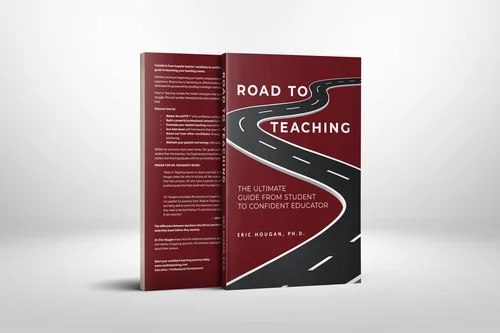
Get interview-ready for every question
Grade-level fit is one category. Road to Teaching covers the rest with the same framework and worked examples, plus behind-the-table perspectives from a principal and a career counselor — and the whole journey from student teaching through signing your first contract.