Discipline & Behavior Interview Questions & Answers
The behavior-management questions hiring committees ask most — discipline plans, tough scenarios, consequences versus punishment — each with a proven framework so you can show you keep dignity, relationships, and learning intact.
Sample answer: “My discipline plan starts with prevention — clear expectations taught and practiced from day one, plus relationships that make students want to meet them. When behavior does break down, I respond privately and calmly, use logical consequences tied to the behavior, and follow up so the student repairs the harm and returns to learning.”
How to answer any discipline and behavior question
Understand the intent
Hear the real question. “Your discipline plan” is really about your philosophy on consistency, consequences, and student dignity.
State your value
Open with a belief: discipline should teach better choices while preserving dignity and the relationship.
Describe your approach
Get concrete: clear expectations, restorative practices, calm private redirection, and consistent, logical consequences.
Explain the benefit
Tie it to outcomes: students learn from mistakes, the relationship survives, and the class stays a safe place to learn.
Give a real example (optional)
A short, true story lands it — a student you redirected privately who turned the behavior around.
Sample question: “Describe your discipline plan.”
“I believe discipline should teach better choices while preserving a student's dignity, so my plan starts with clear, taught expectations and strong relationships. When behavior slips, I redirect privately and apply consistent, logical consequences, often restorative ones, so students learn from the moment and the class stays safe to learn in.”
TEACHING
PREP KIT
The Teacher Interview Prep Kit
- The 10 most-asked interview questions
- A proven framework for answering each
- Space to draft your own answers
15 most common discipline and behavior questions
Each answer applies the framework: state a value, describe a concrete approach, connect it to student learning.
Describe your discipline plan.
Lead with belief — discipline teaches better choices while preserving dignity. Get concrete: taught expectations, private redirection, and consistent, logical consequences. The benefit is students who learn from mistakes in a class that stays safe.
How do you curb student misbehavior?
Start proactive: relationships, engaging lessons, and clear routines prevent most issues. When behavior happens, redirect calmly and privately, then apply fair consequences and partner with families. Accountability with dignity intact.
Full response strategy →Some say you should demand respect. Do you agree?
Respect is earned and modeled, not demanded. Show how consistency, fairness, and genuine relationships build mutual respect — which holds up far better than fear when a class gets tested.
How would you handle a student who constantly disrupted the learning environment?
Get curious about the cause, then act in tiers: relationship and seating first, private redirection next, consistent consequences and family partnership after. The goal is protecting learning while reaching the student.
A paper wad hits you in the back while you write on the board. What do you do?
Stay calm and don't escalate publicly. Address it without losing the lesson, follow up privately to find out who and why, and apply a fair consequence. Composure under provocation is what's being tested.
How do you handle a gifted student who is a discipline problem?
Often the behavior is boredom. Raise the challenge with enrichment and meaningful choice, build the relationship, and pair that with clear expectations. Engagement plus structure solves most of it.
Describe a troubled student and how you helped him or her.
Tell a real, respectful story with a clear arc: how you built trust, what supports you put in place, and the growth that followed. Focus on the relationship and your persistence, not labeling the child.
How would you handle a student cheating on a test?
Address it calmly and privately, follow school policy consistently, and treat it as a teaching moment about integrity. Look for the cause — pressure or gaps — so the consequence also leads to support.
You witness a student bullying another in the hallway. How do you respond?
Intervene immediately to ensure safety, separate the students, and support the target. Then follow up through proper channels with documentation and restorative follow-through. Safety and dignity come first.
A student throws a book at another student during class. How do you respond?
Prioritize safety first — stop the situation, check that everyone is okay, and follow your school's safety protocol. Address it privately afterward and loop in the right people. Calm, decisive, by-the-book.
A student swears in class. How do you respond?
Don't overreact. Quietly address it, restate the expectation, and follow up privately if it continues. Reading the context — frustration versus defiance — lets you respond proportionately and keep the lesson moving.
What is your philosophy on consequences versus punishment?
Consequences teach; punishment just penalizes. Show that you favor logical, restorative consequences tied to the behavior, so students understand the impact and learn to make a better choice next time.
How do you involve parents in addressing behavioral concerns?
Reach out early and as a partner, not just when there's a problem. Lead with care for the student, share specifics, and build a shared plan. Families are allies when you bring them in with respect.
A student continually fails to turn in homework. How do you respond?
Treat it as information, not defiance. Check privately for the cause — difficulty, home circumstances, organization — then add support and apply a consistent, fair policy. The aim is the work getting done, not just a penalty.
What do you know about PBIS, and how do you use it?
Show you understand Positive Behavioral Interventions and Supports: teaching and reinforcing expected behavior schoolwide, with tiered supports for students who need more. Tie it to a positive, consistent culture that prevents problems.
“Dr. Hougan's passion and book directly contributed to my success landing contract after contract.”— Tessa Acay, Third-Year Teacher
Pro tips for discipline and behavior questions
Emphasize relationship building
Show how you address behavior while keeping relationships positive, focusing on root causes rather than just managing symptoms.
Highlight restorative practices
Demonstrate modern approaches that help students learn from mistakes, repair harm, and build better decision-making skills.
Show cultural responsiveness
Acknowledge that behavior expectations vary across cultures, and show how you create inclusive, equitable discipline for all students.
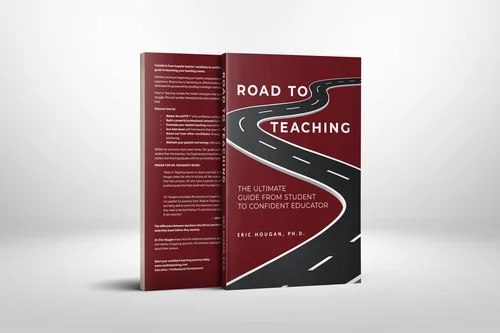
Get interview-ready for every question
Discipline and behavior is one category. Road to Teaching covers the rest with the same framework and worked examples, plus behind-the-table perspectives from a principal and a career counselor — and the whole journey from student teaching through signing your first contract.