Assessment Interview Questions & Answers
The assessment questions hiring committees ask most — formative, summative, and data-driven, each with a proven framework so you can show you measure learning and use what you find to teach better.
Sample answer: “I use assessment as a cycle: assess, analyze, adjust, act. Quick formative checks like exit tickets show me who is missing the target, I analyze the data the same day, and I reteach or regroup students so the next lesson responds to what they actually need.”
How to answer any assessment question
Understand the intent
Hear the real question. “How do you assess learning?” is really about whether you use assessment to guide instruction, not just to grade.
State your value
Open with a belief: assessment exists to move learning forward and show students exactly where they stand against the target.
Describe your approach
Get concrete: exit tickets, mid-lesson checks, clear rubrics, and a feedback loop that drives re-teaching when data says so.
Explain the benefit
Students know their progress, gaps surface early, and instruction adjusts before a unit test ever exposes them.
Give a real example (optional)
A short, true story lands it — an exit ticket that revealed a misconception and changed the next day's lesson.
Sample question: “Explain how you use assessment to improve student learning.”
“I believe assessment should guide instruction and show students their progress toward the target, not just produce a grade. I use quick formative checks like exit tickets and mid-lesson polls, then read the data the same day and re-teach or regroup before moving on, so small gaps never become big ones.”
TEACHING
PREP KIT
The Teacher Interview Prep Kit
- The 10 most-asked interview questions
- A proven framework for answering each
- Space to draft your own answers
13 most common assessment questions
Each answer applies the framework: state a value, describe a concrete approach, connect it to student learning.
Explain how you use assessments to improve student learning.
Lead with belief: assessment guides instruction and shows students their progress toward the target. Name formative checks like exit tickets and quick polls, read the data the same day, and re-teach when it points there. Assessment that changes your next move is assessment that improves learning.
How assessment improves student learning →What methods do you use to assess student learning?
Show a balanced toolkit: formative checks during lessons, performance tasks and projects, and summative assessments to confirm mastery. Match the method to the standard, and explain that variety gives a truer picture of what each student knows.
Other than tests, how do you assess student learning?
Highlight evidence beyond the exam: exit tickets, discussions, performance tasks, portfolios, and observation during work time. Multiple measures let students who struggle on timed tests still demonstrate genuine understanding.
Give an example of a performance assessment.
Walk one task end to end: a clear real-world product, a rubric students see in advance, and feedback before the final version. Performance assessments show whether students can apply learning, not just recall it.
How do you use formative assessment to guide instruction?
This is the heart of the category. Build in frequent low-stakes checks — cold calls, mini-whiteboards, exit tickets — then act on the results the same day by re-teaching, regrouping, or moving on. Formative data is only useful when it changes what you do next.
How would you assess student understanding during a lesson?
Name specific mid-lesson checks: total-participation techniques, targeted questioning, and a quick written check before independent work. The goal is to catch misconceptions while there's still time to fix them.
How do you communicate assessment results to students and parents?
Be clear, timely, and growth-focused. Give students feedback tied to the learning target and a next step, and keep families informed with specifics and a plan. Communication turns a score into something a student can act on.
What role should standardized testing play in education?
Stay balanced and professional. Standardized tests are one data point — useful for spotting trends and equity gaps, but limited on their own. Pair them with classroom evidence rather than letting them drive every decision.
How do you make assessments accessible for diverse learners?
Design for access from the start: clear directions, multiple ways to show understanding, and accommodations from IEPs and language plans. When assessments remove unnecessary barriers, the score reflects learning, not the format.
How do you prepare students for standardized tests?
Keep it healthy: teach the standards well year-round, familiarize students with the format and question types, and build test-taking confidence without narrowing instruction to drill. Strong teaching is the best test prep.
Describe a grading system that has worked well for you.
Tie grades to learning, not compliance. Explain how your system reflects mastery of standards, separates behavior from achievement, and gives students a path to improve through revision. Fair, transparent grading builds trust.
How do you use assessment data to modify your instruction?
Show the cycle in action: gather evidence, look for patterns, then reteach, regroup, or extend based on what you see. Name a concrete trigger — if most of the class misses a concept, you pause and address it before continuing.
How do you ensure your assessments are fair and equitable?
Align every item to what you taught, use clear rubrics applied consistently, and offer multiple ways to demonstrate learning. Equity means each student has a real chance to show what they know.
“Dr. Hougan's passion and book directly contributed to my success landing contract after contract.”— Tessa Acay, Third-Year Teacher
Pro tips for assessment questions
Show the assessment cycle
Connect formative and summative assessment: use data to adjust instruction and re-teach when results say so, rather than testing just to assign grades.
Emphasize student ownership
Help students understand learning targets and track their own progress through self-assessment and goal-setting, so they steer their own growth.
Address equity and access
Show awareness that assessments can create barriers, and offer multiple ways for students to demonstrate what they have learned.
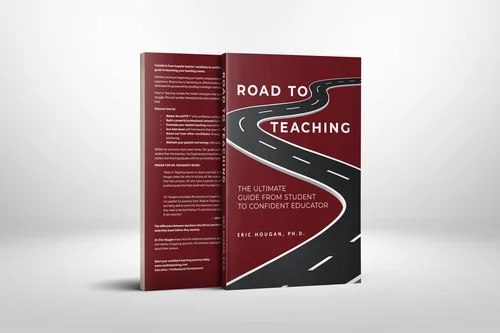
Get interview-ready for every question
Assessment is one category. Road to Teaching covers the rest with the same framework and worked examples, plus behind-the-table perspectives from a principal and a career counselor — and the whole journey from student teaching through signing your first contract.