How to Answer: “What Is Your Teaching Philosophy?”
A focused, authentic answer that names your core beliefs about students and learning — then proves them with the concrete things you actually do in the classroom.
How to answer this question in five steps
Understand the intent
Committees want your guiding principles — the beliefs that drive your day-to-day decisions about students, learning, and what a classroom should feel like.
State your value
Lead with two or three genuine core beliefs, such as instilling a lifelong love of learning in a caring, high-expectation classroom.
Describe your approach
Make each belief concrete: how you model learning, greet students, set and uphold expectations, and build an inclusive, student-centered room.
Explain the benefit
Connect your philosophy to outcomes — engagement, achievement, belonging, and a culture where students want to stay and grow.
Give a real example (optional)
One short story of your philosophy in action makes it memorable and credible — and proves these are beliefs you live, not lines you rehearsed.
Sample question: “What is your philosophy on teaching?”
“I believe every child can reach their potential given high expectations, real support, and a caring classroom. I model lifelong learning by thinking aloud and asking questions in front of my students, greet each one at the door so they feel part of a community, and hold a consistent, dignified standard for everyone.”
TEACHING
PREP KIT
The Teacher Interview Prep Kit
- The 10 most-asked interview questions
- A proven framework for answering each
- Space to draft your own answers
What they’re really evaluating
This question is a values check. Committees want to know what you actually believe about kids and learning, and whether those beliefs translate into how you teach — not just educational buzzwords. They're also listening for authenticity and self-awareness, and for alignment with their school's mission. A philosophy that names real beliefs and backs each one with a concrete classroom practice signals a teacher who is reflective, principled, and genuinely ready for the room.
A strong answer sounds like this
“My philosophy comes down to one belief: every child can reach their potential when they have high expectations, real support, and a classroom that cares about them. So I try to be a model lifelong learner myself — my students hear me think aloud, interact with the text as I read, and ask questions out loud — because I want them to see that curiosity is the point, not just the right answer.
I make that belief concrete in small daily ways. I greet every student at the door so they know they belong to a learning community. I state my learning and behavior expectations clearly and then actually follow through — if a student turns in something below their ability, I meet with them, restate what I expect, and give the support they need to get there.
And I teach with dignity. I want a student-centered room that celebrates progress, so weekly I'm naming specific growth, calling homes with good news, and recognizing contributions. By June, every student has been celebrated for something. That's the culture that keeps kids engaged and in school.”
Common mistakes to avoid
Drowning in jargon
Strings of theory terms with no classroom example sound hollow. Say what you believe in plain language, then show the daily practice that proves it.
Saying what they want to hear
A generic, crowd-pleasing answer is forgettable. Share genuine beliefs and how your experiences shaped them — authenticity is what makes you memorable.
Rambling past your point
Aim for two to three focused minutes. Cover two or three core beliefs with one example each, then stop. A tight answer reads as a clear mind.
“Dr. Hougan's passion and book directly contributed to my success landing contract after contract.”— Tessa Acay, Third-Year Teacher
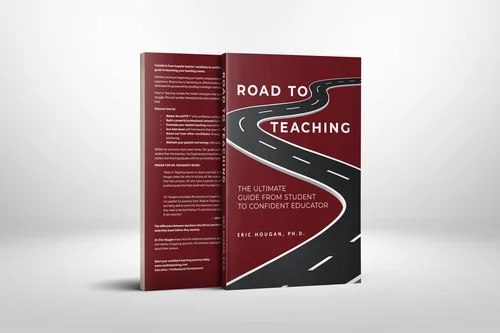
Get interview-ready for every question
Teaching philosophy is one question. Road to Teaching covers the rest with the same framework and worked examples, plus behind-the-table perspectives from a principal and a career counselor — and the whole journey from student teaching through signing your first contract.