Years ago I attended a workshop that taught school administrators how to use behavior-based interview (BBI) questions to hire quality teachers. Sitting in a room full of the people who do the hiring was eye-opening: the questions they were being trained to ask are not the ones most candidates rehearse. More and more committees rely on this style of interviewing, and once you understand the logic behind it, you can prepare for it directly.
The basic idea behind BBI is simple: your past behavior is the best indicator of your future behavior. The approach has been around for years, used primarily in business, and before I became an educator I spent years on the business side, so I have seen it from both worlds. Rather than asking what you would do, committees ask what you have done, because real stories are harder to fake than hypotheticals.
What behavior-based questions sound like
Instead of "How would you handle a disruptive student?" you will hear "Tell me about a time you handled a disruptive student." The shift is subtle but important: you need a specific, true example ready, not a general philosophy.
- "Describe a time you reached a student who was struggling."
- "Tell me about a conflict with a colleague and how you resolved it."
- "Give an example of how you used data to adjust your instruction."
How to structure your answer
The advice I have given candidates since that workshop: describe the problem or situation and the task in front of you, explain the action you took, and finish with the end result. You may know this as the STAR method (Situation, Task, Action, Result), and the label matters less than the discipline of telling a complete, compact story:
- Situation/Task: set the scene in a sentence or two. What was the challenge?
- Action: what you specifically did, not what your team or mentor teacher did.
- Result: the outcome, with evidence where you have it.
And here is the part I stress most, because it separates a decent answer from a memorable one: whenever possible, tie your end result back to improving student learning. Administrators are not hiring you to resolve conflicts or manage behavior for its own sake. Every story should land on what changed for students.
Here is what a complete answer can sound like from a candidate:
Prepare your stories in advance
You cannot invent a good example under pressure. Before the interview, draft five or six true stories from your student teaching that each cover several themes: management, instruction, collaboration, working with families. Rehearse them out loud until they are compact, then adapt them to whatever is asked. Structure the delivery with the five-step response framework and drill them using the questions on our teacher interview questions hub.
Pro move: end every story with a concrete, student-centered result. "His missing assignments dropped from five to zero" is far more memorable than "it went well."
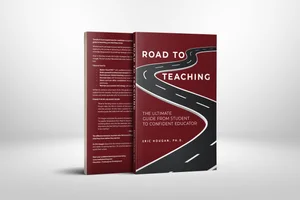
Road to Teaching: The Ultimate Guide
Your complete roadmap from teacher training through student teaching and the edTPA to landing your first contract, with 100+ real interview questions and classroom-ready strategies.
Get the book on Amazon →Frequently asked questions
What are behavior-based interview questions for teachers?
They are questions that ask for specific past examples, usually beginning with "Tell me about a time when..." Administrators use them because past behavior predicts future performance better than hypothetical answers.
What is the STAR method for teacher interviews?
STAR stands for Situation, Task, Action, and Result. Set the scene, state the goal, describe what you specifically did, and share the outcome, ideally tied to a measurable improvement in student learning.
How do you prepare for behavior-based teacher interview questions?
Draft five or six true stories from your experience that each cover multiple themes such as management, instruction, and collaboration, rehearse them out loud until they are compact, and end each one with a concrete, student-centered result.